
Tricholoma portentosum
Taxonomy
Main synonym
Common names
Capuchina.
Geographic references:
Interactive map with data from GBIF.
Morphological Features:
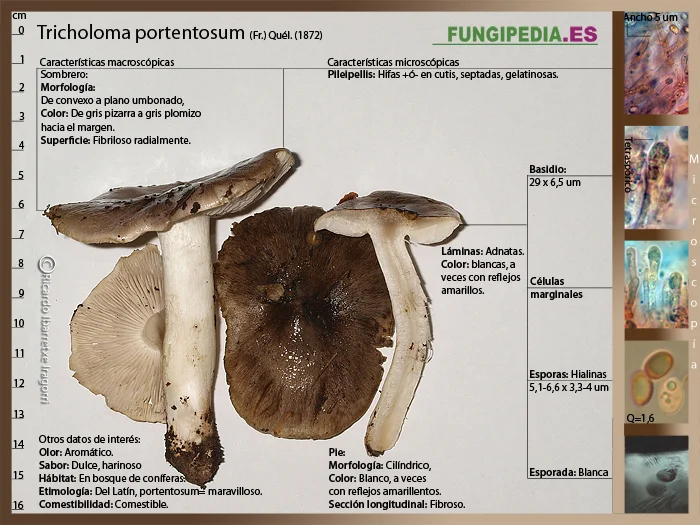
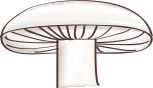
Pileus reaching over 10 cm in diameter, initially conical and pointed, later convex and finally flattened, retaining a broad umbo. The cuticle is glossy and viscid in wet weather, easily separable from the pileus, and covered with dark gray radial fibrils bearing silvery tints on an olive-toned background.
Lamellae adnexed to sinuate and white, becoming yellowish with age; rather distant, not crowded.
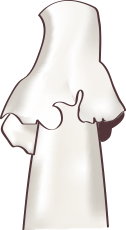
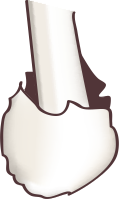
Stipe central and cylindrical, proportionate to the pileus in size; white, though frequently stained yellow, often deeply buried beneath pine needles.
Flesh rather fragile, white, with a mild farinaceous odor and taste.
Habitat:
A thermosensitive species that typically fruits in November, with specimens sometimes found even into early winter due to its high frost tolerance. Typically encountered in pine forests, often fruiting in large clusters, frequently partially buried, though occasionally also occurring under beech trees.
Observations:
A choice edible with a pleasant flavor, often overlooked by Boletus foragers. It may be confused with Tricholoma sejunctum, which exhibits yellowish tones on the cuticle and possesses a bitter taste that renders it inedible; it can also be mistaken for other gray-toned, inedible Tricholoma species more typical of broadleaf forests, such as virgatum or sciodes.

Microscopy of Tricholoma portentosum