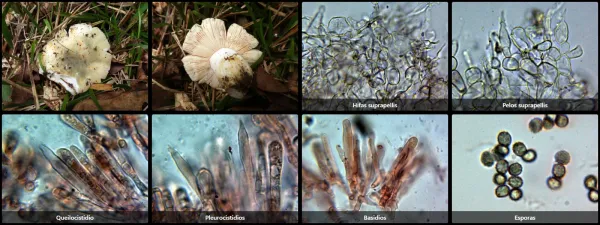

Russula virescens
Taxonomy
Main synonym
Common names
Seta de cura, gibelurdin, gorro verde.
Geographic references:
Interactive map with data from GBIF.


Morphological Features:
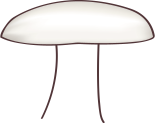
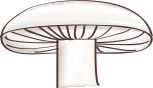
Pileus 5 to 10 cm in diameter, of solid consistency, plane to slightly convex, though it consistently retains a small central depression. Nearly white at emergence, rapidly turning viridian, with the cuticle deeply cracked, revealing the white background beneath.
Lamellae free to adnate, white to cream-colored, crowded, and occasionally bearing rust-colored spots.
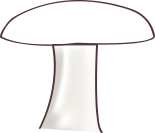
Stipe white, central, and robust, tapering towards the base, where it may also exhibit brownish spots.
Flesh white and firm, with a very pleasant taste and odor; it remains more compact in the pileus while becoming increasingly spongy in the stipe.
Habitat:
A thermophilous species that typically fruits between June and September. Exclusive to broadleaf forests, primarily found in oakwoods and chestnut groves. A relatively uncommon species.
Observations:
A choice edible, highly sought after by mushroom foragers, though it can sometimes be elusive. It is likely the best Russula from a culinary standpoint, despite its tendency to become wormy easily. It may be confused with Russula cyanoxantha var peltereaui, which has an uncracked cuticle and greasy lamellae to the touch. Incomprehensibly, it has been mistaken for Amanita phalloides, DEADLY POISONOUS, resulting in cases of severe poisoning; however, the latter possesses a volva and an annulus, resembling this species only slightly in cuticle color.