
Russula parazurea
Taxonomy
Main synonym
Common names
Gibelberde ilun.
Geographic references:
Interactive map with data from GBIF.
Morphological Features:
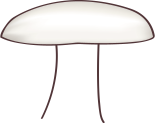
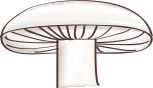
Pileus usually ranging in diameter between 3 and 6 cm, occasionally slightly larger; when young convex with an involute margin, then gradually flattening, eventually becoming depressed at the center with margins turning upward. Variable gray in color, sometimes exhibiting greenish or bluish tones. The cuticle is partially separable and covered by a whitish pruina that persists for quite some time, often washing away due to rain. Margin striate in older specimens.
Lamellae adnate to nearly free, white in color; rather crowded when young, but opening and separating noticeably as the pileus depresses. They detach and break easily with the slightest touch, and usually feature intercalated lamellulae, sometimes forking near the stipe.
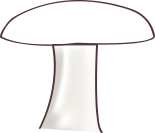
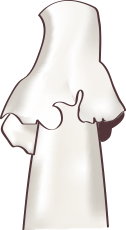
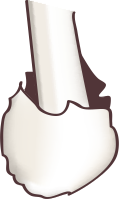
Stipe white and somewhat pruinose, cylindrical and often curved. Solid when young, but becoming spongy and cavernous with age; the base typically develops scurfy or blotchy markings in older specimens.
Flesh relatively thick and brittle, white in color, quite fragile. Odor mild and pleasant; taste sweet, slightly acrid in the lamellae.
Habitat:
This is a frequent species in our region, although it is not geographically widespread. We locate it annually under birches and lindens, as well as under various conifers and even other broadleaf trees. In climatically favorable years, it typically fruits in July, with a second flush occurring during autumn.
Observations:
An edible mushroom that is somewhat excessively fragile, but of good flavor. It is characterized by its grayish pileus, sometimes striate, and above all by the pruina covering it. A very similar species is Russula grisea, which has a uniform bluish-gray color, is somewhat fleshier, with a generally shorter and less curved stipe, and is less pruinose. It is often confused with Russula cyanoxantha, typical of broadleaf woods, which has lardaceous lamellae that do not detach upon contact. Russula ionochlora shares the habitat and resembles it; its lamellae are somewhat lardaceous and its flesh is slightly acrid.
