
Russula ionochlora
Taxonomy
Main synonym
Common names
Rusula gris picante.
Geographic references:
Interactive map with data from GBIF.
Morphological Features:
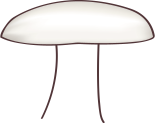
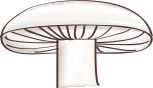
Pileus rather small for the genus; some adult specimens may slightly exceed 5 cm in diameter, never approaching 10 cm. Initially hemispherical, then convex, finally flattening with a central depression. The cuticle is separable and highly variable in color, but the typical form has a greenish center with yellowish or ochre tints, and features a distinctly delimited viscid disc adjacent to a beautifully lilac margin. Margin slightly undulate and striate.
Lamellae adnate, pale cream-colored, nearly lacking lamellulae, slightly lardaceous to the touch yet fragile, detaching easily when brushed with a finger.
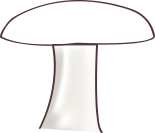
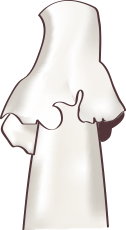
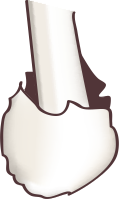
Stipe cylindrical, proportionate to the pileus in size; initially white but gradually acquiring violet suffusions, and in maturity may be distinctly tinged with this color in patches. Solid and rather slender.
Flesh brittle, as is characteristic of the genus, not overly thick and white in color, except at the subcuticular surface where it takes on violet tones. Odor mild and fruity; taste acrid in both the flesh and lamellae, although this acridity is less pronounced than in other Russula species.
Habitat:
This is an early-fruiting species, locatable from late spring through summer. It typically appears under broadleaf trees; the photographed specimens were found beneath oaks. This fungus is very rare and poorly known.
Observations:
This species breaks certain molds, as it is the only member of subsect. Griseineae with acrid flesh, leading us to consider it inedible. It resembles many other Russula species, among which we highlight Russula cyanoxantha, which has more lardaceous lamellae that do not detach easily; Russula grisea, very similar but with sweet flesh; and those of the Russula amoena section, whose odor is unmistakable. It is difficult to distinguish from Russula medullata, which has a darker spore print, larger stature, a preferred habitat under birches, and lamellae that turn yellowish at maturity.