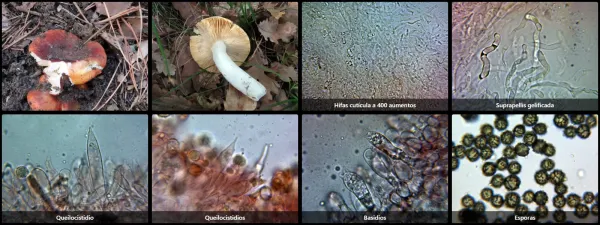

Russula aurea
Taxonomy
Main synonym
Common names
Rusula dorada, gibel kuleto, puagra retgera.
Geographic references:
Interactive map with data from GBIF.


Morphological Features:
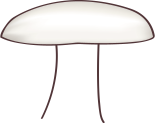
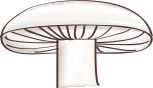
Pileus 5 to 10 cm in diameter, initially convex, later flattening out, but typically developing a central depression in mature specimens. It exhibits a highly striking coloration, superficially reddish over a yellow background; the combination of both colors gives it an orange appearance. The cuticle is separable, but only partially, roughly up to halfway, and is dry.
Lamellae slightly yellowish when young, pale, quickly turning bright yellow especially along the margins where spores of that color are deposited. They are adnate and quite dense.
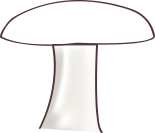
Stipe white, typically mottled with yellow, cylindrical, proportional to the size of the pileus.
Flesh golden-yellow beneath the cuticle, otherwise white, with a pleasant nutty flavor and an equally agreeable odor, albeit not very pronounced.
Habitat:
A fairly thermophilous species that typically appears in summer and during the first half of autumn; its most common habitat is deciduous forests. Infrequent and not particularly abundant.
Observations:
This species constitutes a good edible mushroom and possesses a highly appealing appearance. Viewed from a distance, this fungus may be confused with Amanita caesarea due to color similarity, although it evidently lacks both an annulus and a volva. We consider it difficult to confuse with other Russula species, as none share that specific pileal coloration. Russula nobilis may occur in the same habitats, featuring a red pileus, white lamellae, and very acrid flesh.