
Lepista nuda
Taxonomy
Main synonym
Common names
Pie azul, ziza hankaurdin, pimpinella morada.
Geographic references:
Interactive map with data from GBIF.


Morphological Features:
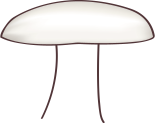
Pileus occasionally reaching up to 15 cm in diameter, though typically found between 5 and 10 cm; initially convex, later flattening. Sometimes obtusely umbonate, at other times completely flattened. Violet-blue in its typical form, but exhibiting various shades, giving rise to multiple varieties. Cuticle lubricous, viscid in wet weather, practically inseparable from the flesh, which becomes brownish in the center at maturity.
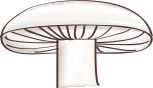
Lamellae adnate and crowded, displaying a more striking violet color when the specimen is young. An important characteristic is that they detach with extreme ease from the flesh, requiring only the pressure of a fingernail.
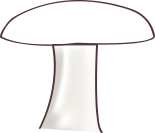
Stipe cylindrical and solid, quite fibrous and thickened at the base, similar in color to the lamellae or slightly paler.
Flesh thick and tender, especially in the pileus, somewhat more fibrous in the stipe, pale lilac or whitish in color. Its odor is fruity; it is a highly aromatic mushroom, with a sweet and pleasant taste.
Habitat:
This mushroom appears in considerable abundance in late autumn, and is even found well into winter in some regions. It grows in diverse habitats, including broadleaf forests, pine woods, or among heather; it is frequent and widely distributed.
Observations:
It is a good edible mushroom suitable as an accompaniment to stews, rather than for consumption on its own, though this is a matter of personal preference. Incomprehensibly to us, many people persist in confusing it with Lepista personata, which only exhibits violet coloration on the stipe, neither the pileus nor the lamellae being so. Another common confusion involves various violet- or lilac-toned Cortinarius species; I know individuals who have consumed them by mistake without noticing the difference, even though they are virtually inedible. Fortunately, they are harmless.