
Aspropaxillus candidus
Taxonomy
Main synonym
Common names
Candida, seta de enebro, seta del biércol, bitigarra, moixernó de tardor.
Geographic references:
Interactive map with data from GBIF.


Morphological Features:
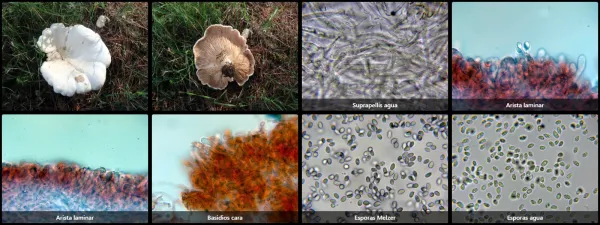
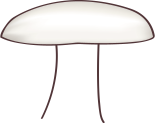
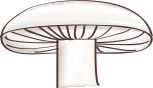
Pileus large, some adult specimens can reach 30 cm in diameter, with it being common to find them between 15 and 20 cm. It has a flattened shape from a very young age, becoming depressed in the center until finally becoming notably infundibuliform. Its cuticle is of a very pure white color in young specimens, acquiring creamy or ochraceous tones with age, satiny and dry, smooth and glabrous, perfectly separable from the flesh. The margin is involute, remaining rolled for much of its development, only becoming thin and entire at the end.
Lamellae decurrent and very crowded, also separable from the flesh, white in color and somewhat unequal, acquiring creamy or duller tones with age, just like the pileus.
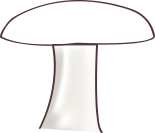
Stipe generally short but thick, cylindrical, white in color, sometimes slightly thickened at the base, solid and fleshy. Its surface is pruinose, especially in younger specimens.
Flesh thick in the central zone of the pileus, solid, white in color sometimes slightly dull, unchanging. Its taste is pleasant, sweet with a farinaceous hint; its odor, while not unpleasant, is somewhat strong, ranging from farinaceous to cyanic.
Habitat:
This species typically fruits in groups of numerous specimens forming what is known as "fairy rings" or in rows. It is usually found in rather high-altitude areas, heath-grasslands, and we have also observed it in clearings of mountain forests. It appears mainly in autumn; it is a frequent species, though not overly abundant, in the northern part of the Iberian Peninsula.
Observations:
Notable features of this species include its robust stature and fleshy appearance, its pure white color when young, its fairly decurrent and crowded lamellae, as well as its solid stipe. There is a toxic species with which it could be confused, Pseudoclitopilus rhodoleucus, which has pinkish lamellae in youth but soon turn white due to the spore print; this species is considerably smaller in size. Leucopaxillus giganteus is very likely an adult form of Clitocybe candida; be careful not to confuse it with toxic white Clitocybe species such as Clitocybe phyllophila=Clitocybe cerussata, whose pileus does not exceed 10 cm. These Clitocybe species that fruit in fairy rings typically produce, through their mycelium, antibiotics such as clitocibin, which affect the grass, giving it a "burnt" appearance.