
Clitopaxillus alexandri
Taxonomy
Main synonym
Common names
Corona de Álava.
Geographic references:
Interactive map with data from GBIF.


Morphological Features:
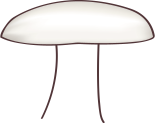
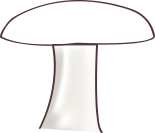
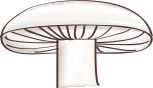
Pileus 5 to 10 cm in diameter, brownish-grey, gradually darkening with age, usually with well-marked concentric markings. The margin remains incurved for a long time.
Lamellae lighter in color when young, gradually darkening to ochre, distinctly brown in age, decurrent on the stipe.
Stipe central and solid, also brown but duller than the pileus, with a length similar to its diameter.
Flesh ochre in color, quite thick, though easily cut with a knife due to its spongy texture; it has a pleasant taste, although its odor resembles freshly cut grass.
Habitat:
According to the consulted literature, it occurs in mountain grasslands and mixed broadleaf forests; however, we have always found it in pine forests in autumn.
Observations:
This species constitutes an acceptable edible despite its unappetizing appearance. In many areas of our region, it is extremely difficult to locate; however, we are fortunate enough to find it abundantly each season at fruiting sites yielding several hundred specimens, always under pines in Castile and León (Spain). It may bear some resemblance to Lepista rickenii, a species with similar culinary characteristics, so confusion is not dangerous, as well as to Paxillus involutus, a deadly poisonous species with a grooved pileus, yellowish lamellae when young, which stains upon handling throughout all parts of the fruiting body.
