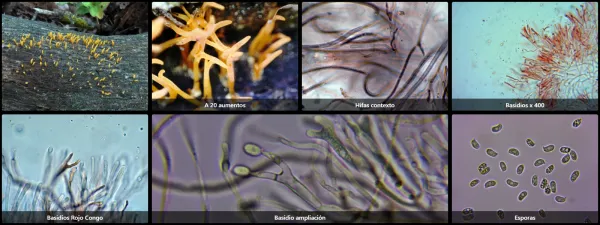

Calocera cornea
Taxonomy
Main synonym
Common names
Mukiadar labur.
Geographic references:
Interactive map with data from GBIF.
Morphological Features:
Basidiocarp erect in form, measuring up to 2 cm in height and only a few millimeters in width. It is usually laterally compressed and consistently tapers towards the apex, which is rounded in most cases, though occasionally slightly forked. Its color ranges from yellow to orange depending on sunlight exposure and hydration level; specimens sheltered from direct sun are consistently yellow. The surface is smooth and glabrous, glossy even when dry, and slightly viscid in wet conditions.
Hymenium immersed within the outer surface of the basidiocarp, smooth.
Stipe absent as such; the fungus forms a single erect structure.
Flesh soft, with a gelatinous texture and yellow color; it lacks any notable odor or taste.
Habitat:
A wood-decaying fungus that fruits consistently in gregarious but not fasciculate clusters on deciduous trees, stumps, or woody debris in general; always on dead wood. It is a very frequent and abundant species in our region, potentially found throughout almost the entire year.
Observations:
This is a very common and easily recognizable fungus due to its erect, gregarious fruiting bodies of gelatinous consistency and yellow color. Calocera viscosa is considerably larger, more viscid, branched, and furthermore exhibits a preferential habitat among conifers. Other yellow fungi occurring in the same habitat with a similar consistency possess discoid shapes or are folded; none are erect.