
Caloboletus radicans
Taxonomy
Main synonym
Common names
Boleto blancuzco.
Geographic references:
Interactive map with data from GBIF.


Morphological Features:
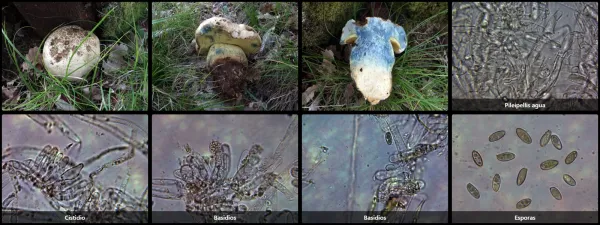
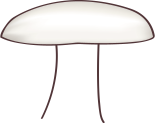
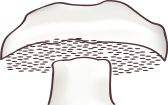
Pileus large-sized, can reach up to 20 cm in diameter, hemispherical to convex and thick-fleshed. The cuticle is smooth, tomentose, and very dry, light-colored, almost white when young, tending to become ochraceous with age; the margin is usually excurrent.
Tubes long and slender, pale yellow when young, later turning green.
Pores small and round, free from the stipe, staining blue upon pressure, bright yellow, becoming greenish with age.
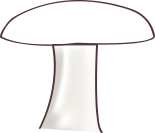
Stipe cylindrical, thick and solid, swollen in the middle and rooting towards the base. The color is light, whitish or yellow, with a fine, indistinct reticulum on the upper portion.
Flesh yellowish-white, firm, thick and compact, turning blue upon exposure to air but only faintly, reddish-brown at the stipe base, with a mild fungal odor and a very bitter taste.
Habitat:
A thermophilous species that appears in summer months and disappears with the onset of cold weather. It is consistently found in very open areas of broadleaf forests; occasionally, several individuals are observed fused at the stipe base.
Observations:
This species is inedible due to the bitterness of its flesh. It may be confused with Caloboletus calopus, which also has bitter flesh, but which however features a red stipe, much more conspicuous. Do not confuse with edible Boletus species of the edule group, which have white pores when young and sweet flesh.