
Amanita strobiliformis
Taxonomy
Main synonym
Common names
Piña, lanperna irintsu, farinera d´escames.
Geographic references:
Interactive map with data from GBIF.
Morphological Features:
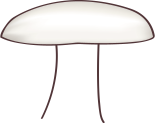
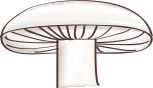
Pileus of notable dimensions, reaching up to 20 cm in diameter; initially globose, becoming convex, and eventually flattened. White when young, later spotted with gray, and covered with concolorous polyhedral warts that may disappear due to rain. Margin lanose with appendiculate remnants when young.
Lamellae generally white, becoming somewhat creamy with age; free from the stipe, crowded, and with a cottony margin.
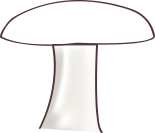
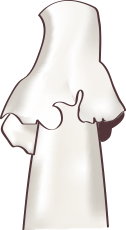
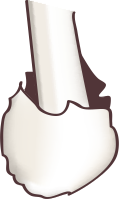
Stipe central and cylindrical, solid and thick, adorned near the apex with a fugacious white ring of mealy consistency. The base is radicate, bearing a very delicate volva, predominantly forming a bulb with concentric ridges ascending upwards.
Flesh white, with a pleasant taste and an indistinct odor.
Habitat:
A very rare and rather thermophilic species that fruits in summer and early autumn in mixed oak woodlands, occasionally in pine forests.
Observations:
Despite being edible, extreme caution is required with white Amanita species, as it can be confused with deadly poisonous taxa such as Amanita virosa. It closely resembles Amanita proxima, which is toxic but possesses a membranous, reddish-ochre volva.
