

Amanita virosa
Taxonomy
Main synonym
Common names
Amanita maloliente, hiltzaile konkordun, farinera pudent.
Geographic references:
Interactive map with data from GBIF.



Morphological Features:
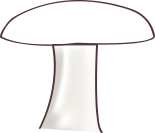
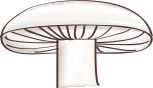
Pileus reaching up to 8 cm in diameter at most, bell-shaped when young, later expanding slightly but never becoming plane; in this state, its shape resembles the helmets cyclists use in time-trial stages. Throughout its development, it retains a blunt umbo. It is very pure white, turning slightly creamy with age, and the margin may retain remnants of the veil.
Lamellae free from the stipe, white, fairly crowded, with regularly interspersed lamellulae.
Stipe markedly elongated, potentially reaching three times the pileus diameter in length, white. Occasionally sinuous, and covered with woolly, concolorous fibrils. Solid when young but soon becoming pithy. Bears a likewise white, membranous, and movable ring, which occasionally remains adhered to the pileus. The volva is sheathing and membranous, also white.
Flesh thin, rather scanty, white, with an unpleasant radish-like odor and a mild, insignificant taste.
Habitat:
This species is uncommon and may be considered rare. Fruiting occurs in summer and autumn, and it has consistently been collected in broadleaf forests with acidic soil; it has never been observed on alkaline substrates.
Observations:
This fungus belongs to the deadly *Amanita* trilogy; ingestion of even a single specimen can cause irreversible hepatic damage. It resembles *Amanita verna*, another deadly spring species, which lacks the distinctive pileal shape of *virosa* and is more globose. Extreme caution is advised to avoid confusion with the edible species *Leucoagaricus leucothites*=*Lepiota naucina*, whose stipe base features a bulbous swelling rather than a volva.