
Tricholosporum goniospermum
Taxonomy
Main synonym
Common names
Ziza orrilila.
Geographic references:
Interactive map with data from GBIF.

Morphological Features:
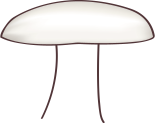
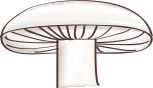
Pileus which in maturity can easily exceed 10 cm in diameter, convex in shape, only old specimens flatten out, with the margin incurved when young, later irregularly undulate. Grayish when young, it soon passes to ochre and tawny tones, with yellowish hues in dry specimens, but generally maintaining a darker center.
Lamellae slightly notched, pale violet or lilac in young individuals, later light ochre while retaining some violaceous tints. They typically bear lamellulae and their arrangement is somewhat irregular.
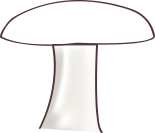
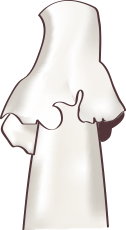
Stipe short relative to the pileus, slightly lilac at the apex, the remainder whitish or light ochre, solid and thickened at the base.
Flesh thick and firm, with a mealy odor less pronounced than that of Calocybe gambosa (perretxiko), and an acidulous taste. The stipe flesh is more fibrous than that of the pileus.
Habitat:
Although it typically fruits less profusely in autumn, it forms extensive fruiting bodies with numerous individuals during spring. It inhabits mountain meadows or grasslands, as well as high-altitude plateaus. Uncommon.
Observations:
This species is a choice edible, a fungus well worth tasting. In our region it is not very common, but when encountered, specimens rarely occur singly. When fruiting in autumn, it may be confused with Lepista personata (violet-stemmed mushroom), which however lacks lilac lamellae and a mealy odor.