
Rubroboletus rhodoxanthus
Taxonomy
Main synonym
Common names
Not available
Geographic references:
Interactive map with data from GBIF.


Morphological Features:
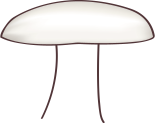
Pileus large, reaching up to 20 cm in diameter, hemispherical when young, then convex, and finally plano-convex. Slightly pubescent in its early stages, later smooth, dirty white in color, though it becomes stained with ochraceous tones with age. The margin is usually pinkish and somewhat reflexed. Not as dry as the pileus of other related species; it can even be slightly viscid.
Tubes of variable length depending on age, initially yellowish and later becoming olivaceous, bluing upon injury.
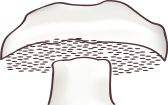
Pores initially yellow-orange, soon turning blood-red or purplish-red, round. They blue markedly when pressed.
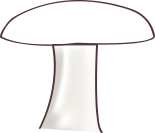
Stipe cylindrical and robust, bright yellow in color, but covered by a broad red reticulum that reveals the yellow background beneath. The exterior also turns blue upon handling.
Flesh firm and compact, bluing upon injury in the pileus, while remaining practically unchanged in the stipe. Yellow in color, with both odor and taste being pleasant.
Habitat:
A thermophilous species, and therefore primarily summer-fruiting, though it is also found in autumn. Fruiting in broadleaf forests. It is a relatively uncommon species and remains unknown to many.
Observations:
Due to its resemblance to Suillellus satanas, and because its edibility is unknown, it is advisable to refrain from consuming it. However, there are notable differences between the two species: S. satanas lacks the broad reticulum of this species, its flesh is white rather than yellow, and it blues weakly but uniformly throughout all parts. Rubroboletus legaliae is similar, though it possesses reddish flesh beneath the cuticle, a more pinkish pileus, and flesh bluing similar to that of S. satanas.