
Strobilurus tenacellus
Taxonomy
Main synonym
Common names
Collybia tenaz, Pinotxa-kolibia min.
Geographic references:
Interactive map with data from GBIF.
Morphological Features:
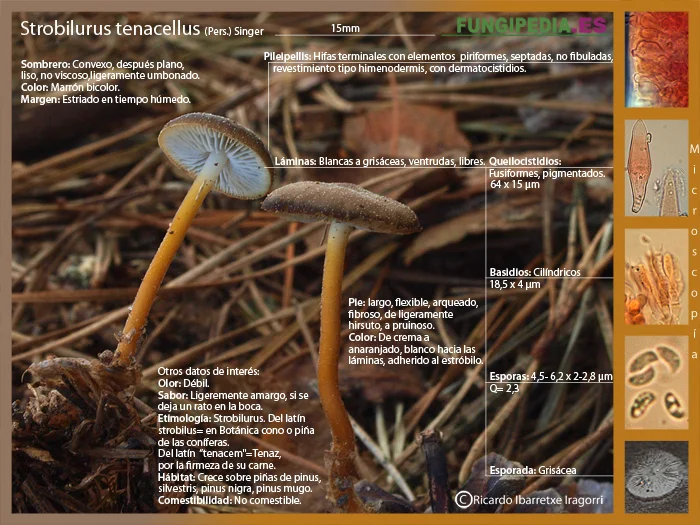
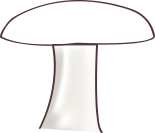
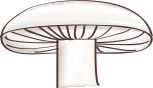
Pileus of small dimensions, barely reaching 3 cm in diameter, campanulate at first, later convex to plano-convex. Frequently exhibits a distinct umbo in the center. Its cuticle is dark brown or fawn-colored, smooth, with an unstriate margin.
Lamellae adnate to the stipe or free, whitish and not very crowded, although somewhat thick relative to the size of the mushroom.
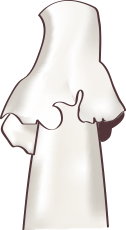
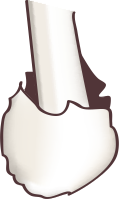
Stipe very long, cylindrical, of tough consistency, brown in the lower portion and paler towards the pileus. It terminates basally in a kind of very long root covered with pilose hairs that sometimes exceeds the size of the mushroom itself.
Flesh white, of elastic and quite tough consistency, with a faintly perceptible mild fungal odor and a somewhat bitter taste after chewing for a while.
Habitat:
A spring species that fruits on buried cones of various pine species. When encountered, it gives the impression of growing directly from the soil. It is relatively common.
Observations:
It is inedible due to the bitterness of its flesh after chewing for a while, which is not the case with Strobilurus esculentus, which fruits at the same time on cones of various spruce species and has sweet flesh, making it palatable. Very similar and also sweet is Strobilurus stephanocystis, which fruits at the same time and in the same locations as the species described here, exhibiting reddish-brown tones.
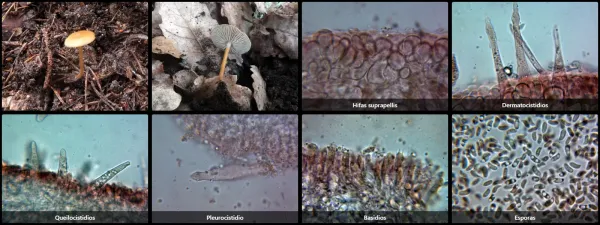
Microscopy of Strobilurus tenacellus