Simocybe centunculus
Taxonomy
Main synonym
Common names
Not available
Geographic references:
Interactive map with data from GBIF.




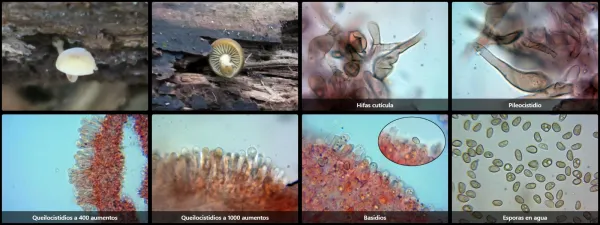
Morphological Features:
Pileus small-sized, reaching up to 3 cm in diameter at most, usually between 1 and 2 cm; convex in early stages, becoming plane with a slight central depression. The surface is finely velvety or pruinose, olive-brown in hydrated specimens; however, being hygrophanous, its color may vary to various shades of ochre. The margin is incurved in young specimens, later becoming thin, slightly paler than the rest, and striate.
Lamellae adnate with lamellulae, brown in color, and rather widely spaced.
Stipe proportionate in size to the pileus, cylindrical and occasionally curved, fistulose. Finely pubescent when young, later becoming pruinose, with a ground color similar to that of the pileus. A whitish tomentum is frequently observed at the base.
Flesh scant and soft, brown in color, without any distinctive odor or taste.
Habitat:
An early-fruiting species, it can be found in spring and during the summer months. Its small size often causes it to go unnoticed, making it difficult to determine whether it is a rare or common species. It fruits on degraded woody debris or directly on rotting logs.
Observations:
A species poorly documented in the literature, perhaps due to its small size. Within its genus, we note its resemblance to Simocybe haustellaris, which, however, typically fruits during the cold months, late autumn and winter, and is more strictly lignicolous. It may also be confused with other species such as Pluteus flavofuligineus, with which it shares a habitat; however, we must not forget that Pluteus species have a pink spore print.