
Russula puellula
Taxonomy
Main synonym
Common names
Not available
Geographic references:
Interactive map with data from GBIF.


Morphological Features:
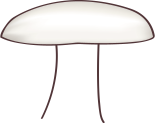
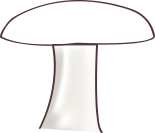
Pileus unusually small for the genus; none of the specimens observed during collection even reached 4 cm in diameter, with mature specimens typically measuring between 2 and 3 cm being the norm. Surface matte, perhaps slightly viscid and glossy when wet, of a rather striking carmine-red color with a darker center, fading to pinkish tones in the rain. Cuticle separable from the pileal flesh for approximately two-thirds of its extent, with a smooth margin in young specimens and striate in mature ones, becoming grooved with age.
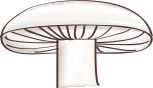
Lamellae free from the stipe and relatively distant, ventricose, pale in color ranging from whitish to pale cream, staining a much darker cream with spore deposition. A slight pungency is noted upon mastication in some specimens.
Stipe proportionate to the pileus, white, with a slight tendency to yellow at the base and turning dingy over time. Attenuate or clavate, very fragile, partly due to becoming hollow at an early stage.
Flesh fragile and white, unchanging on exposure, with a weak and indistinct odor, and a sweet taste.
Habitat:
This species should be considered rare and worthy of protection; indeed, it is listed on the Red Lists of several European countries. Fruiting in broadleaf forests under both oaks and beeches, our collection was made in an American oak (Quercus rubra) woodland. It appeared in substantial groups during June, between late spring and early summer.
Observations:
A rare species of the genus Russula characterized by its small size, sweet flesh, and fragility. Russula puellaris is very similar, but its pileus exhibits purplish tones and shows a greater tendency to yellowing, turning saffron-colored on the stipe. Russula meltzeri is another small Russula with a similar appearance to that described here, but it typically has a scurfy or cracked cuticle in mature specimens.