
Russula olivacea
Taxonomy
Main synonym
Common names
Rúsula oliva, gibeloliba.
Geographic references:
Interactive map with data from GBIF.

Morphological Features:
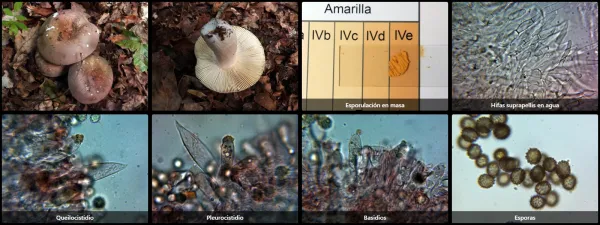
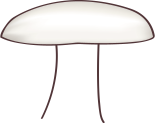
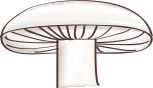
Pileus with a fleshy appearance and notable size; it is common to collect specimens up to 15 cm in diameter, although most range between 6 and 12 cm. Initially convex, becoming plano-convex at maturity, without fully flattening despite slight central depression. Regarding coloration, we have never encountered a single specimen lacking multiple distinct hues: olive-green, vinaceous, purplish, brownish, and many other shades; it is precisely this chromatic variability that makes it identifiable. Surface dry, with an incurved margin persisting for a long time.
Lamellae subfree, cream-colored, becoming slightly yellowish-ochre at maturity; more crowded when young, then spaced apart, often intervenose. Broad and rather thick.
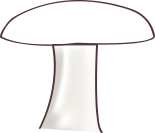
Stipe thick and robust, proportionate to the pileus in size, cylindrical, white with diffuse pinkish or reddish-purple blushes. Solid and hard when young, becoming spongy later.
Flesh thick and firm, white, staining ochre or yellow; brittle. Pleasant fruity odor and sweet taste.
Habitat:
A species typical of beech forests, where it grows, sometimes abundantly, during both summer and autumn; its occurrence under other broadleaf trees should not be ruled out.
Observations:
This fungus may be somewhat indigestible for sensitive stomachs, which has led to its edibility being questioned; we classify it as a choice edible, having consumed it on multiple occasions without any adverse effects. It shares habitat with Russula romellii, which is slightly smaller, has a white stipe, and features an olive-green pileus center fading to lilac toward the margin. Due to its overall appearance, it may be confused with Russula faginea, which has a less intensely colored reddish pileus.