
Rimbachia neckerae
Taxonomy
Main synonym
Common names
Not available
Geographic references:
Interactive map with data from GBIF.
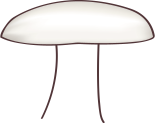
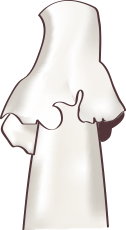


Morphological Features:
Fruiting body sessile, of small dimensions; the specimens found measured between 2 and 8 mm in diameter. Its shape was irregular, although concave in most of them. The margin is generally wavy and translucent, although it is not uncommon to find specimens with more regular shapes. It is pure white in color, standing out against the intense green of the moss that serves as its substrate, to which it adheres laterally. The external surface is, besides being white, finely furfuraceous.
Hymenium generally smooth and pure white in color, although it sometimes shows traces of folding; it is also furfuraceous, but less so than the external surface.
Stipe absent; it is a sessile species.
Flesh, given the small size of the fungus, is insignificant, with no notable odor or taste.
Habitat:
It is a moss-parasitic fungus that generally appears on living mosses of the genus Neckera, but not exclusively. We found it on living moss beside a river in a very humid area, back in May. The tree species may not be significant in this case, but it was Picea abies.
Observations:
The genus Rimbachia shares certain macroscopic similarities with Arrhenia; however, they do not belong to the same group and are entirely unrelated. There are three recognized species of the genus in Europe. Aside from the one described here, there is Rimbachia bryophila, which differs from this species by the presence of well-marked folds on the hymenium, and Rimbachia arachnoidea, which is more cream-colored than this species and not pure white.