
Resupinatus applicatus
Taxonomy
Main synonym
Common names
Not available
Geographic references:
Interactive map with data from GBIF.
Morphological Features:
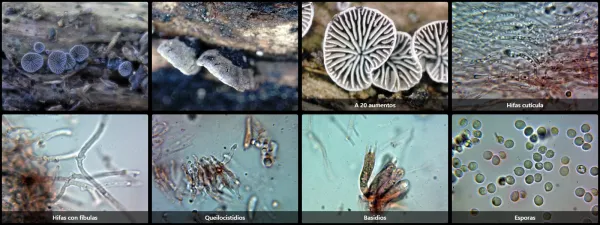
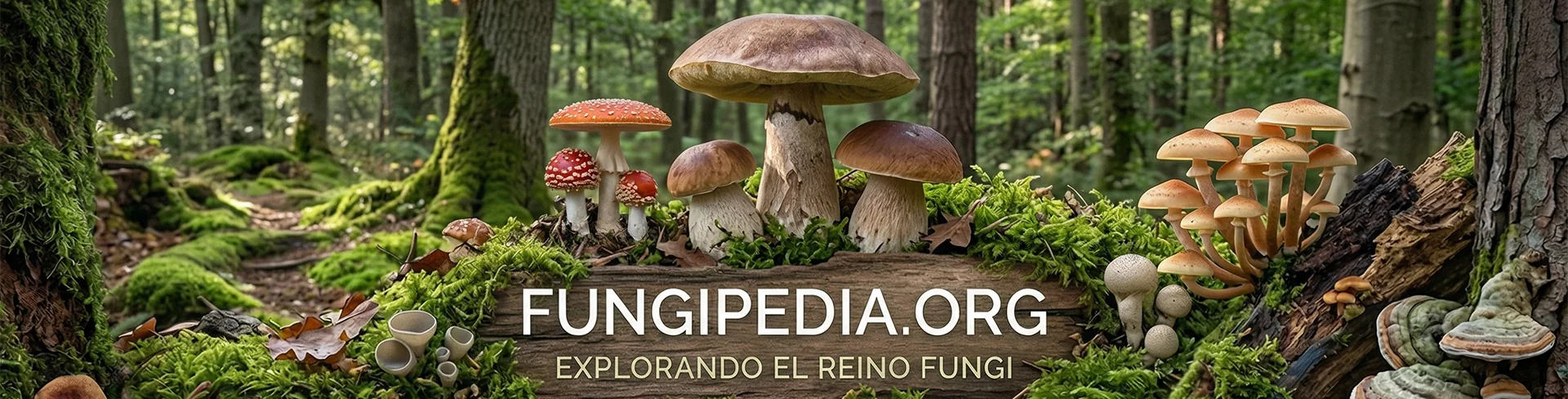
Pileus whose diameter rarely exceeds one centimeter, with a shape similar to that of species in the genus Crepidotus, attached to the substrate by the apex of the pileus and projecting with the lamellae facing upward in a concave form, fan-shaped being less common. It is grayish, more or less dark depending on age and hydration, becoming almost black when old. Its cuticle is felted in young specimens, then smooth or tomentose, with a regular, smooth margin lacking striae.
Lamellae converging from the margin toward the point of attachment to the substrate, gray in color. They are thick and well-spaced, of varying lengths; a few are long and span the entire length of the pileus, others, the majority, occupy approximately two-thirds, and additionally bear smaller lamellulae.
Stipe absent; attaches directly to the substrate via the pileus.
Flesh scant, with a gelatinous texture, without appreciable odor and with an insignificant taste.
Habitat:
This is an eminently lignicolous species that fruits on wood in a state of decay, sometimes on rotten stumps, but also on the underside of bark or fallen branches. It is more common on hardwood (angiosperm) wood, but also occurs on conifers. It fruits during autumn and winter, being a fairly frequent and abundant species.
Observations:
Species of the genus Resupinatus are characterized by attaching to the substrate via the pileus and adopting a concave or fan-shaped form; they are generally small-sized species. Resupinatus trichotis is of dubious taxonomic status, distinguished by its darker black color and the presence of elongated hairs in the area near the point of attachment to the substrate. Another similar species is Hohenbuehelia silvana, readily distinguishable under the microscope by its arched spores and larger size.