
Pluteus nanus
Taxonomy
Main synonym
Common names
Pluteo enano
Geographic references:
Interactive map with data from GBIF.


Morphological Features:
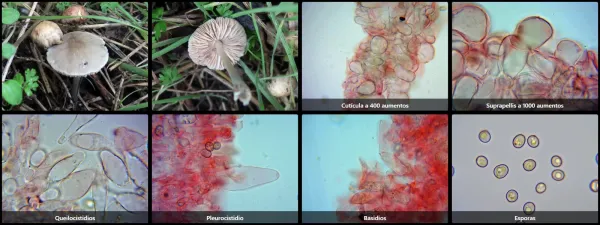
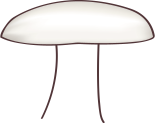
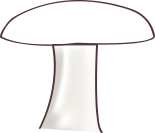
Pileus small-sized; the diameter of mature specimens ranges from 2 to 4 (5) cm. Initially conic-campanulate, it expands upon development to become flattened, retaining an obtuse umbo at the center. Cuticle of variable brown coloration, generally darker at the center, finely granular (sec.cellluloderma), with some radial folds but not radially fibrillose. Margin opaque at emergence, but markedly striate for approximately two-thirds of its length in mature specimens.
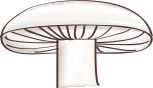
Lamellae free and relatively distant, quite thin but broad, occasionally ventricose, with numerous lamellulae; white when young, but turning pinkish upon maturation due to the mass color of the spore print.
Stipe elongate relative to the pileus, may exceed 5 cm in length; whitish with a silky-fibrillose appearance, bearing faintly pronounced longitudinal striations and concolorous fibrils. The base is typically somewhat thickened.
Flesh thin and not very firm, whitish in color; without discoloration upon cutting and completely tasteless. It lacks any remarkable odor worthy of mention.
Habitat:
A not overly abundant but widely referenced species with a saprotrophic lifestyle. It sometimes appears on soil over buried woody debris, but most often fruits directly on wood, thus exhibiting a markedly lignicolous character. It shows a clear preference for the wood of various broadleaf trees and may fruit at various times of the year, predominantly in autumn.
Observations:
This species is characterized by its small size, darker brown coloration at the center of the pileus, a striate margin, and a whitish fibrillose stipe with a thickened base. Although non-toxic, it possesses very little flesh and is completely tasteless, thus lacking any culinary value. It closely resembles Pluteus phlebophorus, which is of identical size but distinguishable by its reticulate-venose pileus and a faint radish-like odor. It is more difficult to separate from Pluteus satur=Pluteus pallescens, which typically has a more grayish stipe with much more pronounced grooves; both species exhibit minor microscopic differences.
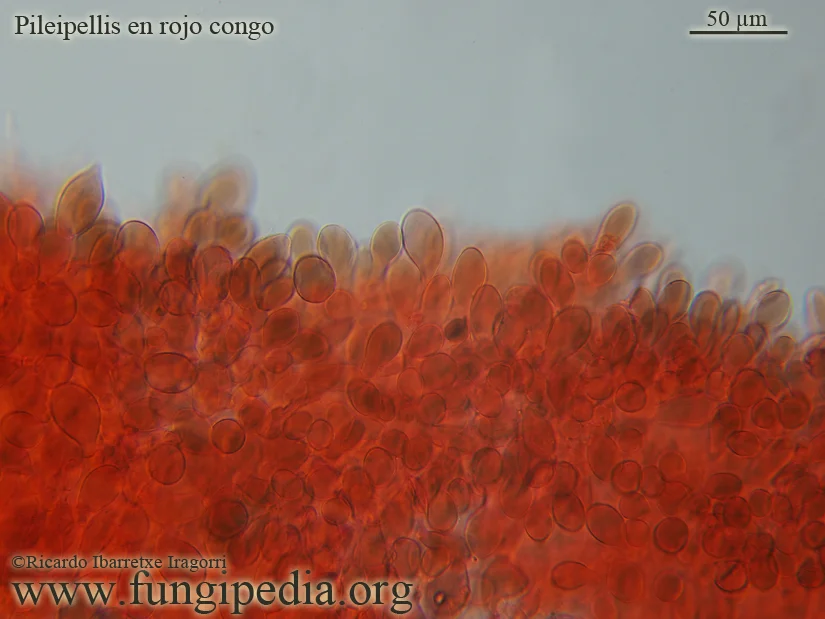
Microscopy of Pluteus nanus