Pluteus cervinus
Taxonomy
Main synonym
Common names
Plúteo cervino, pluteo marroi, bolet de soca rosat
Geographic references:
Interactive map with data from GBIF.




Morphological Features:
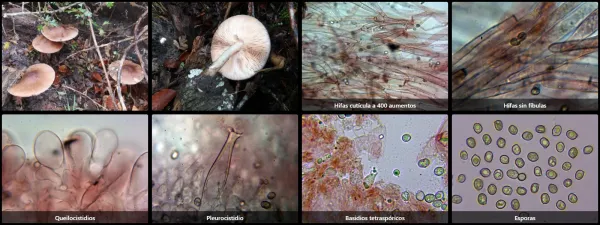
Pileus highly variable in size, with a diameter ranging from 5 to 15 cm; initially conico-campanulate at emergence, soon becoming convex and finally flattened, often with a raised or obtusely umboed center in many specimens. Cuticle smooth and matte, only slightly glossy during rainy weather, somewhat silky at first then glabrous, variable in color within brown to fawn shades, from light brown to darkish-brown, frequently with a very dark center, radially fibrillose. Margin fairly regular and scarcely undulate, moreover not striate at all.
Lamellae generally free, although occasionally specimens with nearly adnate lamellae are found; white when young, acquiring light gray tones before eventually turning pinkish upon sporulation. They are crowded and contain numerous lamellulae, rounded or ventricose; the margin typically retains its original white color as they mature.
Stipe central and cylindrical, often with a thickened base, elongated, sometimes exceeding 10 cm in length; fleshy in appearance yet fragile, with a whitish ground color, but typically covered with longitudinal fibrils that are grayish or occasionally darkish.
Flesh rather thin and white, more fibrous in the stipe; not overly firm, becoming soft with age. It has a sweet taste initially with a slightly bitter undertone, and a radish-like odor, though less pronounced than that of Hebelomas.
Habitat:
A saprotrophic and lignicolous species that feeds on decaying wood, thus appearing on old stumps or dead trees, as well as on sawdust or general woody debris. It shows no particular preference for a specific tree type, fruiting equally on conifers and various broadleaf trees. It typically appears solitary or in small groups throughout the year, provided conditions are optimal for its reproduction.
Observations:
Although considered edible, it possesses little flesh and lacks firmness; furthermore, its radish-like odor and slightly bitter taste indicate that it is of poor culinary quality. A species that may share its habitat and with which it should not be confused is Pluteus salicinus, which contains high levels of psilocybin; it has a less robust appearance, a lighter pileus color (grayish with olivaceous or bluish tints), and whitish stipe fibrils. Aside from this, there are many harmless Pluteus species with which it may be confused, for example Pluteus atromarginatus, which features a darkish lamellar margin.
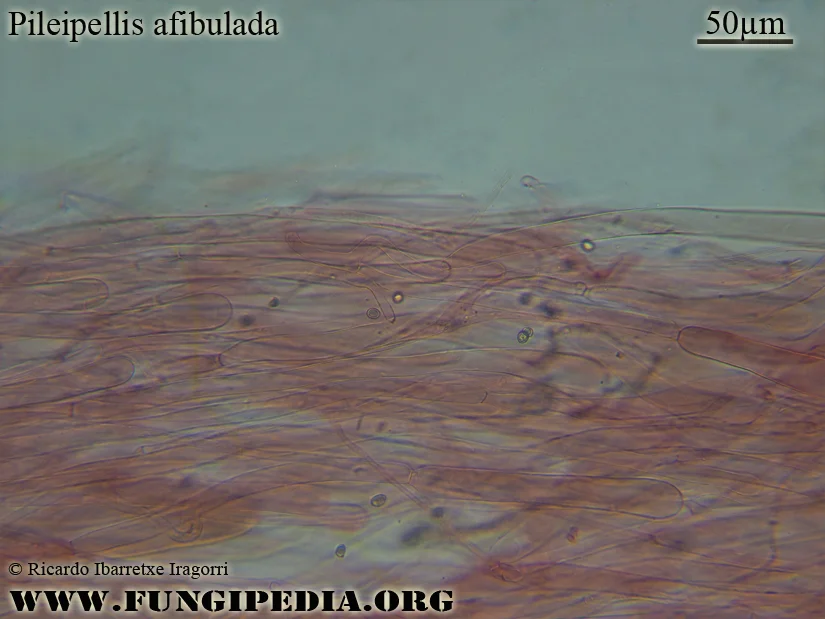
Microscopy of Pluteus cervinus