Peroneutypa scoparia
Taxonomy
Main synonym
Common names
Not available
Geographic references:
Interactive map with data from GBIF.




Morphological Features:
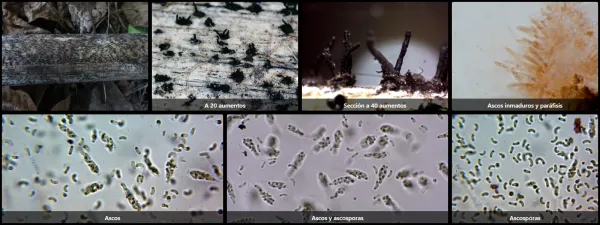
Carpophore of minute size, scarcely exceeding 1 mm in diameter even in fully developed individuals. It emerges by rupturing the bark of the host branch, arising from a black stroma visible only under magnification. It is funnel-shaped with the opening facing downward, or bottle-shaped with a long neck.
Perithecia markedly black in color, characterized by elongated necks disproportionate to the minute size of the fruiting body. From these necks, arranged in clusters of up to eight, emerge numerous dark brown to nearly black hairs, their number varying considerably between stromata.
Stipe absent; fruits directly on the wood.
Flesh imperceptible.
Habitat:
Fruits during winter and spring, parasitizing fallen branches of broad-leaved trees. The photographed specimens were collected on May 1, 2008, on cut branches of large-leaved lime (Tilia platyphyllos), although this species may also occur on elms or alders.
Observations:
This fungus is readily located by the conspicuous hairs emerging from the bark. In its dormant phase, lacking these hairs, it resembles Diatrype disciformis; however, examination with a hand lens to inspect the necks will clarify identification. It is not an uncommon species; rather, it frequently goes unnoticed.