Leocarpus fragilis
Taxonomy
Main synonym
Common names
Not available
Geographic references:
Interactive map with data from GBIF.




Morphological Features:
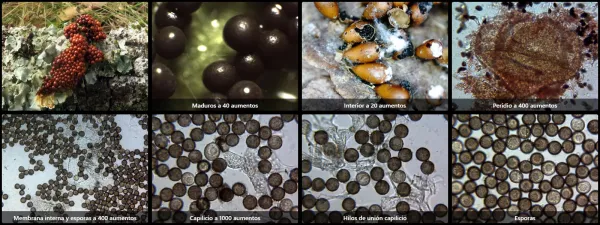
Sporophore that individually is very small, scarcely a couple of millimeters in diameter by the same in height, but forms associations of multiple individuals of variable size and number. It is usually pear-shaped or more distinctly ovoid, and its color varies greatly depending on the degree of ambient humidity and the developmental stage it is in. Initially bright yellow, it later turns red, finally reddish-brown, and under drought conditions becomes completely brown. Its surface is smooth and glossy except in the final stage described.
Stipe sometimes absent, but when present it is whitish or translucent, and very short, barely 1 mm or slightly more.
Flesh insignificant; we can say it lacks it entirely.
Habitat:
This Myxomycete is widely distributed, abundant and frequent. It can appear practically at any time of the year, although it is more common in autumn. It fruits on various herbaceous debris, conifer needles, wood, feces, or on plant stems.
Observations:
It is one of the most well-known Myxomycete species, belonging to the order Physarales, characterized by having phaneroplasmodia, containing calcium carbonate in its composition, and by the pigment present in its spores. It is commonly confused with Fuligo septica, which is yellow but lacks individually visible sporophores, instead forming a type of mucilaginous mass.