
Lactarius lilacinus
Taxonomy
Main synonym
Common names
Lactario lila.
Geographic references:
Interactive map with data from GBIF.
Morphological Features:
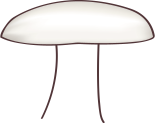
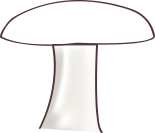
Pileus of medium size, may exceed 5 cm in diameter. Initially convex, then flattened, and finally depressed in the center, with an irregularly undulate margin. Usually lacks an umbo, and its cuticle is dry, non-glossy, displaying a beautiful pink-lilac hue when the specimen is hydrated, turning to a pinkish-ochre during dry periods.
Lamellae adnate to slightly decurrent, very widely spaced and interspersed with lamellulae, orange-cream when young, eventually becoming the same color as the pileus.
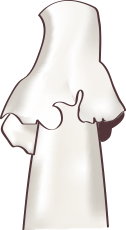
Stipe central, cylindrical, becoming hollow quite rapidly, pinkish-ochre to lilac in color, and often curved.
Flesh whitish, firm and brittle, slightly lilac in the outermost layer beneath the cuticle. Exudes a watery latex that becomes acrid only after some time, turning gray with greenish tints upon drying. Strong odor reminiscent of chicory; taste initially sweet, becoming pungent after a short while.
Habitat:
This fungus fruits beneath birches, alders, and occasionally beeches, in very humid, moss-covered areas. It is an autumnal and uncommon species.
Observations:
Also found beneath birches, particularly in mountainous regions, is a similar species, Lactarius spinosulus, which lacks the odor of this species and has a small, umbonate, and scaly pileus. Lactarius glyciosmus bears some resemblance, but its coconut-like odor immediately distinguishes it.