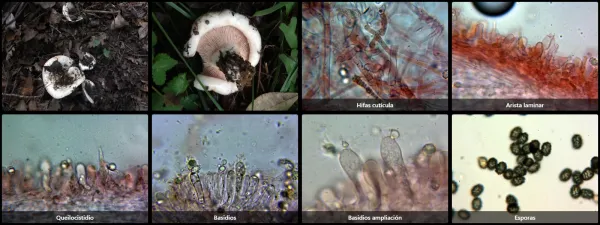

Lactarius controversus
Taxonomy
Main synonym
Common names
Lactario controverso, esneki zuri-orriarrosa, pebrás de riberada.
Geographic references:
Interactive map with data from GBIF.



Morphological Features:
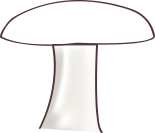
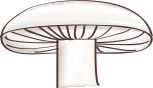
Pileus of considerable size, usually reaching 20 to 25 cm in diameter, convex with a central depression initially, later distinctly infundibuliform. Its fundamental color is white, but it is often spotted or blotched with red or pinkish hues. The margin in young specimens is typically involute, becoming irregularly lobed in older specimens.
Lamellae slightly decurrent, initially white but turning pinkish or reddish with age, closely spaced.
Stipe short and white, variable in position, may be central, eccentric, or even lateral, hard and solid. Occasionally spotted with pink.
Flesh thick and hard, yet brittle, white in color, exuding a white latex that is not excessively abundant and remains unchanging upon exposure to air. It lacks a pleasant odor, and its taste is acrid and unpleasant.
Habitat:
A species typical of riparian forests; we have found it abundantly in poplar stands. Its fruiting season is typically autumn, although it can also be encountered during rainy springs.
Observations:
An inedible mushroom due to the acridity of its flesh. A species of notable size with pinkish lamellae, a feature that distinguishes it from other white Lactarius species, such as Lactarius vellereus, which is even larger and has entirely white lamellae. Other Lactarius species in its section are smaller. It also resembles Russula delica, which lacks latex.