Lactarius blennius
Taxonomy
Main synonym
Common names
Lactario mucoso, pagadi-esneki berde.
Geographic references:
Interactive map with data from GBIF.




Morphological Features:
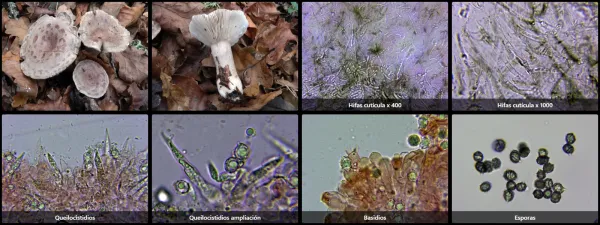
Pileus up to 10 cm in diameter, plano-convex in shape, becoming markedly depressed at the center with maturity. The color is highly variable, ranging from gray to green, though it is most commonly found as a dull olive-green. It typically bears spots, but not always concentric; sometimes they are somewhat irregular. Its cuticle is viscid, and the margin remains involute for an extended period.
Lamellae adnate to slightly decurrent, white in young specimens, becoming somewhat rusty-stained with age. They are quite crowded and exude copious latex when touched.
Stipe central, cylindrical, and proportional to the pileus size, very pale grayish-green in color.
Flesh white in color, quite thick although fragile and brittle. Exudes abundant white latex that, upon drying, imparts a grayish tint to the flesh. Odor faintly perceptible and taste acrid after prolonged mastication.
Habitat:
It is a very frequent and abundant mushroom in beech forests and, in general, in all types of broadleaf woodlands. Its most common fruiting season is autumn.
Observations:
It is inedible due to the acridity of its flesh, although it is non-toxic. Its greenish coloration, the spots on the pileus, which lacks zonation, make it one of the easiest Lactarius species to identify. Lactarius fluens resembles it somewhat, but its pileus is zoned and its latex remains unchanged.