
Inonotus hispidus
Taxonomy
Main synonym
Common names
Yesquero erizado, bolet de soca vellutat, lizar ardagai iletsu, isca peluda.
Geographic references:
Interactive map with data from GBIF.



Morphological Features:
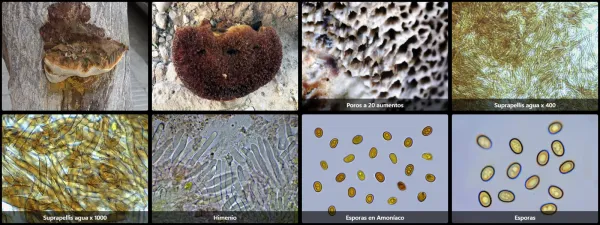
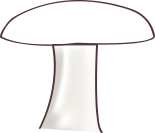
Basidiocarp sessile, of annual growth, with a size that can easily exceed 20 cm in width and protrude from the substrate by about 10 cm, with a thickness of approximately 4 to 5 cm at the point of attachment to the substrate. It is semicircular in shape when fully developed; at emergence, it resembles a nodule of the tree itself. It is reddish-brown in color, although this hue varies from more orange tones when young to markedly browner as it ages. Its surface is covered with bristly hairs visible to the naked eye, which persist on the specimen and do not completely disappear even when old.
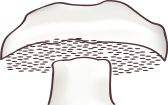
Hymenium composed of tubes and pores; the former are relatively long and ochre in color, while the pores are small and somewhat angular, yellowish-ochraceous when young, turning ochre with age. For a rough estimate, pore density is approximately 2 to 3 per mm. Under certain environmental conditions, the hymenial surface exudes small watery droplets.
Stipe absent; this is a sessile species.
Flesh thick; when young, it is succulent and spongy, yellowish in color. Over time, it dries out and adopts ochre tones while hardening, though it appears harder than it actually is. It has little to no odor, and we are unaware of anyone who has tasted it to determine its flavor.
Habitat:
This fungus fruits on the trunks of living deciduous trees, such as oaks and beeches, as well as on fruit trees. In northern Iberia, it typically appears in August, although in other regions it fruits somewhat later. It is a fairly common species.
Observations:
This species is characterized by the bristly hairs on its upper surface, which allows for relatively easy identification. Other related species also fruit on the living trunks of various broadleaf trees, such as Pseudoinonotus dryadeus, which exudes thick amber-colored droplets from its upper surface. In contrast, the fungus described here only exudes small watery droplets from the hymenium, not from above. Other genera sharing this habitat also exist, such as Ganoderma or Phellinus.