

Imperator torosus
Taxonomy
Main synonym
Common names
Not available
Geographic references:
Interactive map with data from GBIF.




Morphological Features:
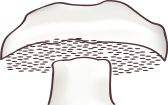
Pileus large and fleshy in appearance, may approach 20 cm in diameter at full maturity, hemispherical to convex in shape, never becoming flattened. Color variability is very high; initially yellow but shifting to ochre, pinkish, and even purplish tones. Cuticle slightly pubescent when young, later smooth and glabrous, dry or weakly viscid during rainy weather, turning dark bluish upon the slightest touch.
Tubes rather short and slender, yellow in the early stages, greenish when old, turning conspicuously blue both upon cutting and rubbing.
Pores yellow initially, later reddish, round and small, turning intensely blue upon the slightest abrasion.
Stipe short and solid, stout and very robust, yellow in color, though it gradually reddens from the base with age. The reticulation is faint, not conspicuous to the naked eye. Like the rest of the carpophore, it stains blue upon rubbing.
Flesh thick, dense and solid, yellow in color, turning dark bluish very rapidly upon cutting. Odor fruity and taste pleasant.
Habitat:
A mushroom found in broadleaf forests from late summer into autumn. Rather rare and scarce.
Observations:
We have classified it as toxic because it is so when raw, and furthermore its consumption is not recommended, although we know of individuals who have consumed it without any adverse effects. Between this species and the formerly named Boletus purpureus, a series of varieties have been established that have eventually attained independent taxonomic rank over time, such as Boletus xanthocyaneus, Imperator rhodopurpureus with its respective varieties, or Suillellus rubrosanguineus. A rather complicated group within the genus.