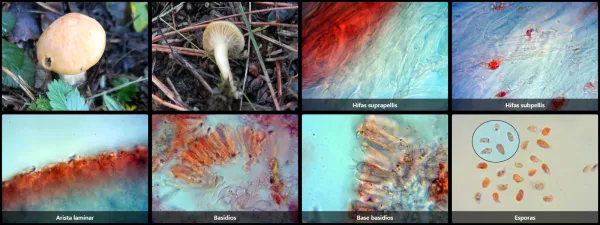

Hygrophorus nemoreus
Taxonomy
Main synonym
Common names
Baso-ezko.
Geographic references:
Interactive map with data from GBIF.
Morphological Features:
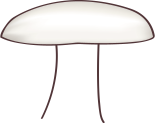
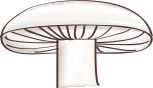
Pileus in the adult state can easily exceed 5 cm in diameter, with some specimens reaching up to 10 cm. Initially hemispherical in shape, it soon becomes convex and then flattened, occasionally becoming slightly depressed at the center when old; some specimens are somewhat umbonate. The cuticle is radially fibrillose, dry, and even slightly velvety when young, predominantly orange-ochre in color, more orange toward the center and fading toward the margin where creamy or yellowish tints may appear. The margin is incurved and fairly regular, not striate.
Lamellae slightly decurrent, well-separated and thick; in young specimens they are pale, whitish or cream-colored, but with age tend to acquire tones similar to those of the pileus.
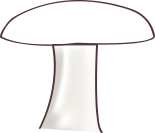
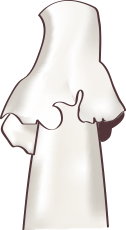
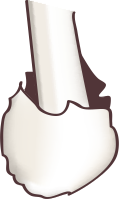
Stipe generally cylindrical, occasionally somewhat attenuated, much paler than the pileus, whitish, though it darkens slightly with age. Its surface is slightly fibrillose and granular in the region adjacent to the lamellae.
Flesh firm and white in color, rather thick; the taste is slightly farinaceous and the odor pleasant, also somewhat farinaceous.
Habitat:
This Hygrophorus is by no means praticolous; it fruits within broadleaf forests, solitarily or in small groups. We have located it under beeches and also under oaks. This species was once very frequent in our forests but is now in marked decline, making it less easy to encounter than in previous years. Its preferred fruiting season is autumn, though it typically persists well into winter.
Observations:
This is an edible species, without particular culinary merit in our opinion, though considered good by some. A notably similar species is Cuphophyllus pratensis, a meadow-dwelling fungus with a more distinctly orange coloration and comparable culinary value. Hygrophorus poetarum is larger in size, possesses a strong and characteristic odor, and shares the habitat of the described species. Hygrophorus pudorinus is rarer and associated with montane coniferous forests, particularly under firs; its viscid cuticle distinguishes it from this species.