
Hygrophorus limacinus
Taxonomy
Main synonym
Common names
Llenega gris, llenega negra.
Geographic references:
Interactive map with data from GBIF.
Morphological Features:
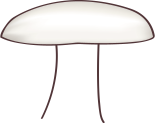
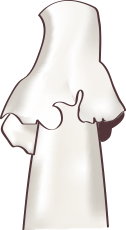
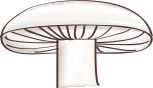
Pileus 5 to 15 cm, with an obtuse umbo, dark gray in the center fading toward the margin. Very viscid, especially during rainy periods, with a strongly incurved margin. Cuticle separable.
Lamellae quite thick and well-spaced, slightly decurrent, very white when young, acquiring creamier tones as the mushroom matures.
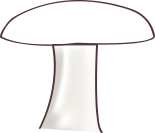
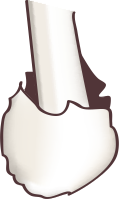
Stipe white in the upper portion, with a well-defined zone below which it exhibits brownish-gray tones due to its viscosity. Subradicate, ventricose in the central region and slightly tapered near the lamellae, reaching up to 13 cm in length.
Flesh thick, firm, and very white, with a mild fungal odor and pleasant taste.
Habitat:
Exclusive to calcareous pine forests, where it typically appears in autumn in generally small groups. It is a frequent but not overly abundant species.
Observations:
Once the cuticle is peeled and the stipe scraped (recommended due to its viscosity), this "gray viscid mushroom" constitutes a choice edible, with a mild flavor and texture similar to the highly prized Boletus. It can be easily confused with Hygrophorus agathosmus, which, however, possesses characteristic granulation on the cuticle and an unmistakable odor of bitter almonds. It may also be confused with other Hygrophorus species such as olivaceoalbus or persoonii, which never attain the robust stature of latitabundus.
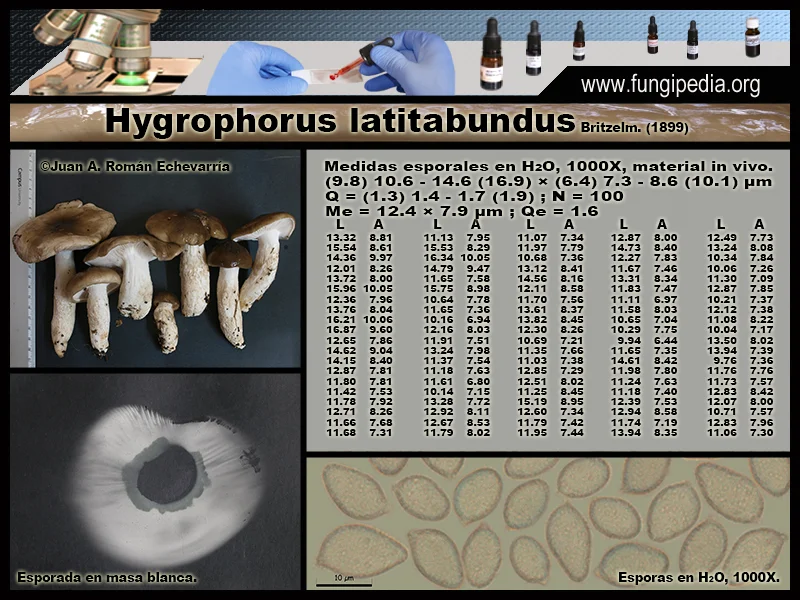
Microscopy of Hygrophorus limacinus