
Hohenbuehelia petaloides
Taxonomy
Main synonym
Common names
Orellana de terra.
Geographic references:
Interactive map with data from GBIF.
Morphological Features:
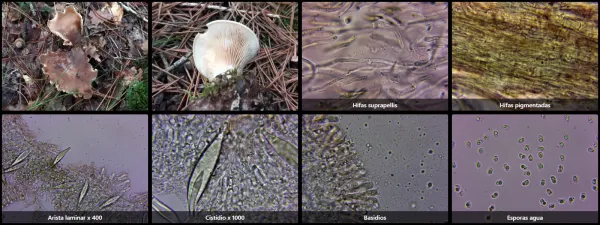
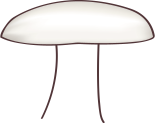
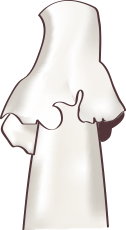
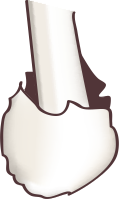
Pileus can exceed 10 cm, highly variable in color ranging from gray to various shades of ochre, usually covered by a type of pruina which, unlike in other species, is not mealy but rather gelatinous. Its shape is peculiar, open on one side and irregularly lobed, even spatulate.
Lamellae strongly decurrent, crowded and narrow, white or very pale cream in color.
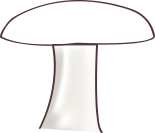
Stipe very short, sometimes appearing as a continuation of the pileus itself, generally paler than the latter, felted at the base, invariably lateral, never central.
Flesh thin and firm, somewhat gelatinous in consistency, with a mild taste and odor.
Habitat:
Fruits primarily in autumn, on the forest floor of both coniferous and broadleaf woods, with a preference for calcareous soils. A rather uncommon species.
Observations:
A highly mediocre edible that is not worth collecting. Its occurrence on the ground, although it may be associated with tree roots, distinguishes it from various Pleurotus species, which grow on wood. However, it closely resembles other Hohenbuehelias such as Hohenbuehelia tremula, which exhibits more yellowish tones.