
Hericium cirrhatum
Taxonomy
Main synonym
Common names
Not available
Geographic references:
Interactive map with data from GBIF.

Morphological Features:
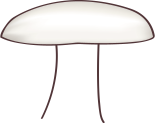
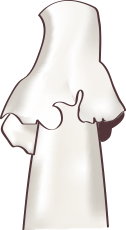
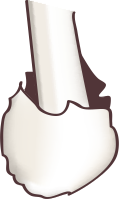
Fruiting body composed of a series of imbricate caps joined together to form a single mass and attached directly to the substrate. The upper surface is cream-colored, though it tends to become discolored over time towards ochraceous tones. It bears hair-like projections resembling small spines attached to the cuticle, which are visible to the naked eye. Its size ranges from 5 to 15 cm in width.
Hymenium formed by quite long spines, easily exceeding one centimeter in length; cream-colored when very young, but rapidly turning yellowish, even ochraceous in zones.
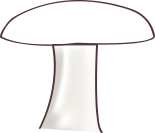
Stipe absent; it is a sessile species.
Flesh is soft when the mushroom is very young, becoming leathery with age; whitish in color, turning slightly ochraceous when old. Its taste is mild and its odor is practically imperceptible.
Habitat:
Grows primarily during autumn on broadleaf trees, with a preference for beeches, generally attached to dead or dying trees. It is a very rare fungus that should be protected.
Observations:
When very young, some authors classify it as edible; however, the flesh hardens quickly, so we consider it not worth harvesting. Furthermore, it is a fungus that requires protection. This species is included within the genus Hericium, despite these lacking caps, and there are also notable differences in its internal tissue.