
Hemimycena cucullata
Taxonomy
Main synonym
Common names
Not available
Geographic references:
Interactive map with data from GBIF.


Morphological Features:
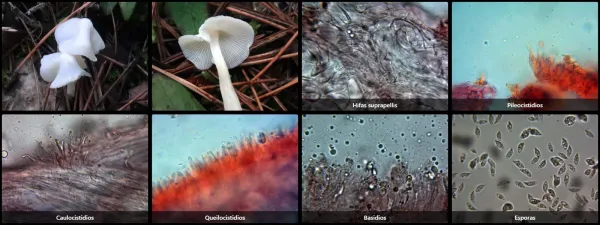
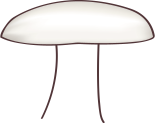
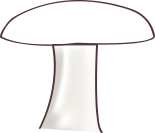
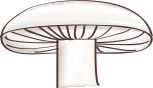
Pileus very small in size; the diameter of the specimens we found ranges from 0.5 to 2.5 cm. Conic when immature, subsequently bell-shaped, and upon expanding it does so from the margin, maintaining a conic central zone which forms a prominence giving it a curious appearance, almost like a sunbonnet. Finally, it opens without ever becoming completely flat. It is pure white from inception and throughout almost its entire development, but over time the central zone acquires a yellowish tint. Cuticle smooth and shiny, viscid, especially in wet conditions.
Lamellae ascending, white with a regular margin, moderately crowded.
Stipe long and slender, completely disproportionate to the pileus size. It appears fragile yet remains firm; it does not snap when handled, unlike Mycena species. Pure white in color, with distinctly visible white hairs at the base.
Flesh somewhat elastic and insignificant given the small size of the fungus. Its odor and taste are equally indistinct.
Habitat:
A small, uncommon, rare species that fruits during autumn on herbaceous debris or leaf litter; exceptionally, some specimens were found growing among moss.
Observations:
The photographed specimens were found at the edge of a path in the Biscayan locality of Galdakao, where hundreds of them were present. This fungus stands out for its white color and the peculiar shape adopted by the pileus in intermediate specimens, as well as for the firmness of the stipe and the hairs at the base. All of this distinguishes it from Mycena species; however, other similar Hemimycena species exist, such as Hemimycena lactea, requiring microscopic analysis for accurate determination.