
Gyromitra esculenta
Taxonomy
Main synonym
Common names
Bonete, mitra muin, bolet de greix.
Geographic references:
Interactive map with data from GBIF.

Morphological Features:
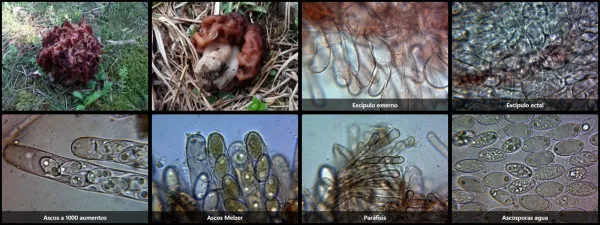
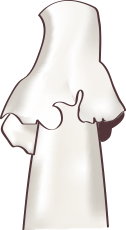
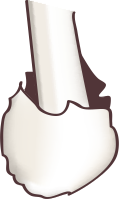
Pileus up to 10 cm in diameter, with a highly distinctive shape resembling the convolutions of a brain, covered in wrinkles or irregular protuberances. The color ranges from light brown to reddish-brown depending on the moisture content and age of the specimen, although the inner surface is typically paler. It is usually attached to the stipe at several points.
Hymenium covering the entire outer surface of the pileus.
Stipe typically short, white, deeply furrowed or wrinkled, and hollow.
Flesh fragile and brittle, with an insignificant odor and taste when raw.
Habitat:
A fungus that fruits in various coniferous forests, not exclusively under pines. It is predominantly spring-fruiting and relatively uncommon.
Observations:
For a long time, it was sold dried in the markets of several European countries; currently, its sale is strictly prohibited. It is a highly toxic and dangerous fungus, particularly when raw, and in extreme cases can even be fatal. It closely resembles Gyromitra gigas, another spring-fruiting species with a yellowish-ochre color and a very short stipe. Slightly different and autumn-fruiting is Gyromitra infula.