Glutinoglossum glutinosum
Taxonomy
Main synonym
Common names
lengua de tierra glutinosa.
Geographic references:
Interactive map with data from GBIF.





Morphological Features:
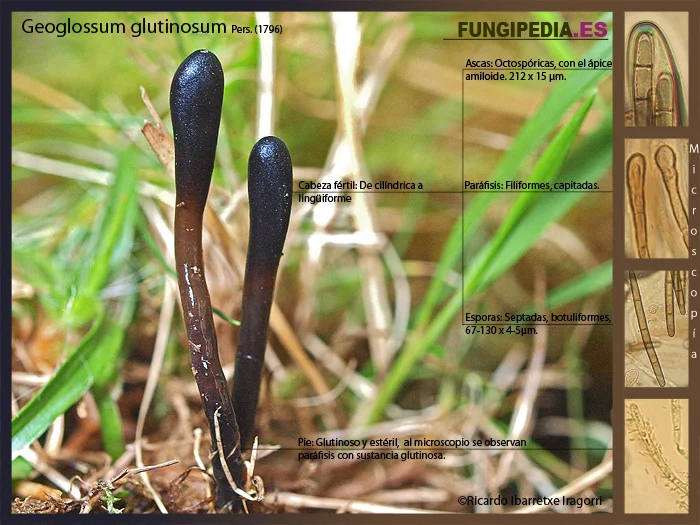
Fruiting body that can occasionally exceed 5 cm in height, structured into two perfectly differentiated parts, a sort of stipe and a head. The latter usually has a flattened shape and is longitudinally grooved in its central area, although this character is subject to some variability. What remains constant is its viscid surface, ranging in color from dark brown to black. This head constitutes the fertile portion of the fruiting body.
Stipe sterile, slender and solid, distinctly brown in color, without typically turning black. It is viscid even without recent rain and glutinous when adequately hydrated, to the point of slipping between the fingers.
Flesh scanty, insignificant, without specific odor or taste.
Habitat:
This is a fungus that is not uncommon, but generally goes unnoticed, as it fruits among grass that is usually taller than the fungus itself. Found in meadows from late autumn through winter.
Observations:
This species is characterized by its viscid surface, which becomes even glutinous with rain, and its brown stipe. These features clearly distinguish it from other related species that fruit in the same season and habitats, such as Geoglossum fallax, which is dry and has a black stipe, or Trichoglossum hirsutum, which bears hairs on its surface. Approximately ten species belonging to the genus Geoglossum are recorded for Europe.
Microscopy of Glutinoglossum glutinosum