
Ganoderma lucidum
Taxonomy
Main synonym
Common names
Reishi, pipa, ardagai pipa.
Geographic references:
Interactive map with data from GBIF.
Morphological Features:
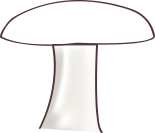
Basidiocarp of variable shape, sometimes spatulate, at other times reniform, flabellate, or simply semicircular. Its size can exceed 10 cm in diameter, and occasionally even reach 15 cm. It exhibits a beautiful mahogany color that persists upon maturation; the only feature that varies is the margin color, which is initially yellowish and becomes white in mature specimens, although in old, non-growing individuals it eventually turns entirely mahogany. Surface smooth and somewhat undulate, coated with a varnish-like layer that imparts a glossy appearance.
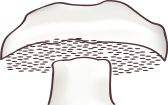
Hymenium composed of elongated white tubes that gradually darken to cinnamon tones, with round pores that become angular in older specimens, numbering approximately 5 per mm and concolorous.
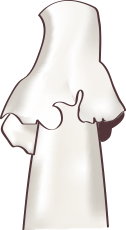
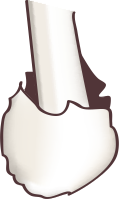
Stipe of irregular length, though generally long, cylindrical or occasionally thickened, mahogany-colored like the pileus, and similarly coated with a varnish-like layer. Generally lateral.
Flesh thick and hard, fibrous, cream-colored with varying lightness depending on age. Lacks any appreciable odor.
Habitat:
Grows year-round at the base of trees, or attached to stumps or buried roots of various broadleaf trees, particularly oaks. A relatively common fungus.
Observations:
A medicinal species with a millennia-old tradition in the East, known as Reishi; currently, extracts of this fungus are available worldwide and are cultivated and marketed in capsule form. Recent studies have corroborated its benefits in treating numerous ailments; in fact, in Japan, complementary medicine has recognized it for cancer therapy. Its list of benefits is so extensive that it warrants a separate chapter. Due to its distinctive macroscopic characteristics, we consider it an absolutely unmistakable fungus.
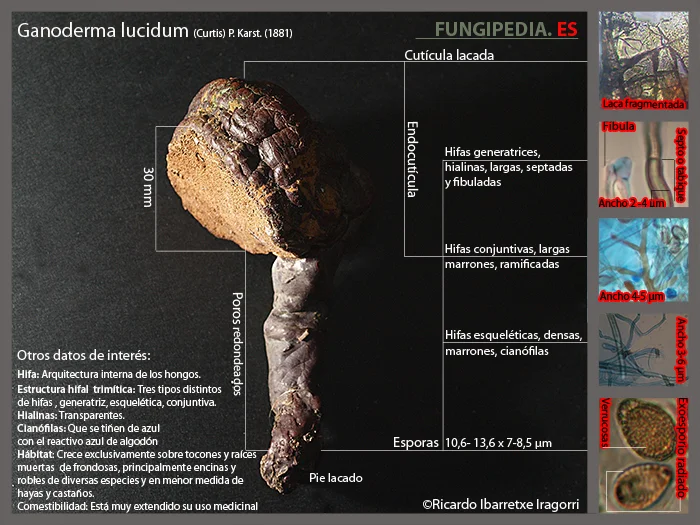
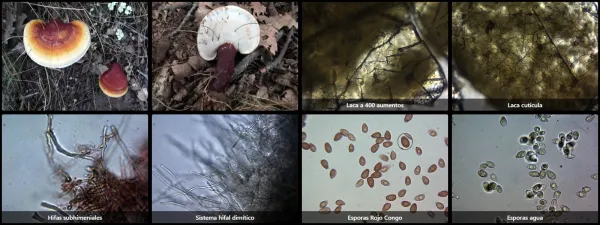
Microscopy of Ganoderma lucidum