
Fistulina hepatica
Taxonomy
Main synonym
Common names
Lengua de buey, hígado de buey.
Geographic references:
Interactive map with data from GBIF.



Morphological Features:
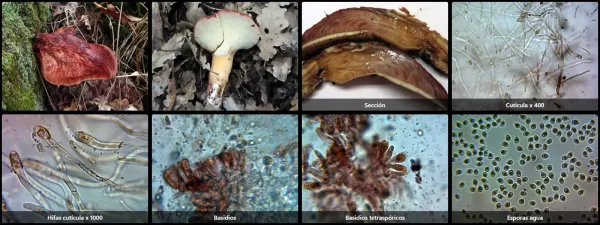
Fruiting body that can reach up to 20 cm in width, initially tongue-shaped on the wood, later opening and widening to adopt a kidney shape. The upper surface is composed of blood-red papillae that darken over time to a liver-like color, easily separable from the flesh. It is glossy and has a viscid consistency.
Tubes fine, thin, and short, initially white, becoming yellowish with age.
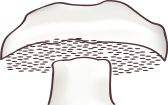
Pores very small and rounded, pinkish-cream in color. 2 to 3 pores per mm, reddening upon touch.
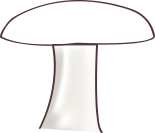
Stipe very short, lateral, and rudimentary, sometimes so immersed in the wood that it is not visible to the naked eye, quite thick and ochre-cream in color.
Flesh thick and dense, though quite fibrous, red in color, exuding a blood-colored liquid when cut, especially in young specimens. Its raw taste is quite acidic, and its odor is mild and unremarkable.
Habitat:
Appears in late summer and throughout autumn, invariably attached to the wood of living trees of the genera Quercus and Castanea. It is frequently encountered, though not excessively abundant.
Observations:
It is an absolutely unmistakable fungus, unique within its genus, and furthermore edible. Although its culinary value is limited, young specimens can be consumed, sliced thinly for salads, or cooked. We recommend cooking it to volatilize the tannic acid it contains.