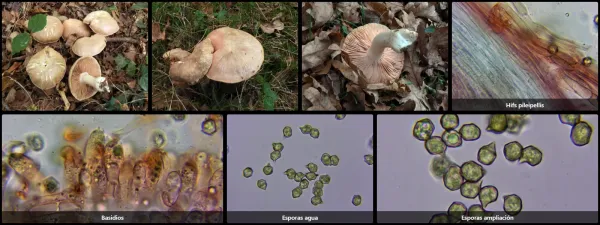

Entoloma sinuatum
Taxonomy
Main synonym
Common names
Entoloma lívido, pérfida, engañosa.
Geographic references:
Interactive map with data from GBIF.

Morphological Features:
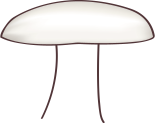
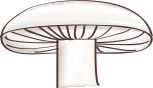
Pileus large, up to 20 cm in diameter, cream-colored though variable in shades, with beige tinges. Fleshy, dry, and bearing inconspicuous concolorous fibrils. Initially globose, becoming convex and eventually flattened, while always retaining a rather rounded margin.
Lamellae somewhat distant, cream-colored when young, becoming salmon-pink due to the spore deposit. Notched, never decurrent on the stipe.
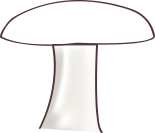
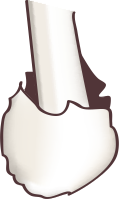
Stipe generally white, sometimes slightly cream-colored, strong and robust, hard and solid, central and cylindrical. Occasionally quite long.
Flesh white and firm in both the pileus and stipe. In young specimens, the odor and taste are mealy and not unpleasant; only more mature or old specimens develop a more disagreeable smell.
Habitat:
This species typically appears in late summer and autumn in deciduous forests, particularly oak woods.
Observations:
HIGHLY TOXIC; despite lacking an unpleasant taste, it is responsible for the majority of mushroom poisonings occurring each year. It is often confused with Clitocybe nebularis, which has whiter lamellae that are decurrent on the stipe, as well as a characteristic non-mealy odor. In the exceptional case of fruiting in spring, it could be confused with Calocybe gambosa, which has a much stronger mealy odor and white lamellae.