
Szczepkamyces campestris
Taxonomy
Main synonym
Common names
Not available
Geographic references:
Interactive map with data from GBIF.
Morphological Features:
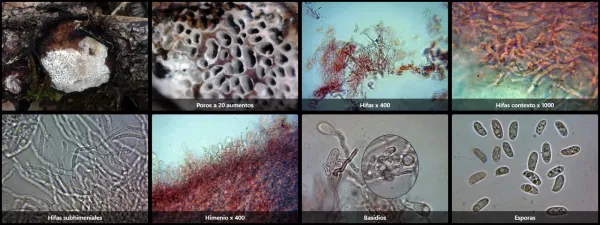
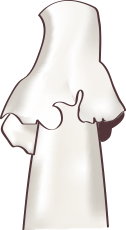
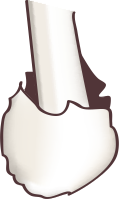
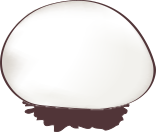
Fruiting body resupinate, attached to the substrate as a crust, or even cushion-shaped, with highly variable size; individuals ranging from merely 3 to 4 cm in length up to some exceeding 10 cm, with a thickness that can surpass one centimeter. They are typically annual fruiting bodies, but occasionally they remain desiccated and can be observed for extended periods. They are light ocre or even cream-colored, but the margin stands out prominently due to its black coloration.
Hymenium composed of very short tubes arranged in layers, each merely 1 to 2 mm long and light ocre in color, with irregular labyrinthine pores measuring 1 to 2 per mm. The pore color transitions from cream in youth to brownish tones in age.
Stipe absent; this is a species attached directly to the substrate.
Flesh with a texture resembling cork or wood itself, ochraceous in color, and virtually odorless.
Habitat:
This species grows exclusively attached to the wood of broadleaf trees, generally on woody debris or fallen branches. It can be found practically year-round; nevertheless, it should be considered a rare species.
Observations:
It is a relatively little-known species distinguished from similar taxa by its blackened margin, particularly in mature specimens. Donkioporia expansa is very similar, fruiting on oak wood, often even worked timber, but its margin is whitish. Datronia mollis exhibits a more projecting growth habit on the wood, rather than being strictly crust-like, and its pores are grayish.