
Cortinarius impolitus
Taxonomy
Main synonym
Common names
Not available
Geographic references:
Interactive map with data from GBIF.
Morphological Features:
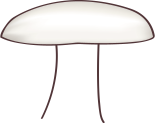
Pileus small for the genus, not even reaching 5 cm in diameter, bell-shaped in the early stages of development, soon becoming convex, and practically flattened when mature. In most collected specimens, an obtuse umbo is observed in the central area, never pointed. When properly hydrated, the pileal surface is reddish-brown, but as it is a hygrophanous fungus, it fades to more ochraceous tones upon drying. The cuticle is fibrillose, especially when young, and the margin is regular with a marked tendency to split and form cracks.
Lamellae adnate, same color as the pileus, though becoming ferruginous-ochre with sporulation, broad and well-separated, with the lamellar edge of the same color.
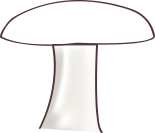
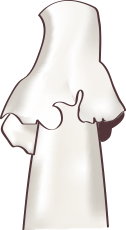
Stipe cylindrical and proportionate to the pileus, concolorous except near the apex where it is usually paler. In young specimens, it appears fibrillose due to remnants of the cortina deposited on it, but these tend to disappear over time.
Flesh not very thick or firm, same color as the rest of the fruitbody, absorbs considerable water. Barely noticeable odor and insignificant taste.
Habitat:
Although it may sporadically appear in autumn, spring is when it is most likely to be found. It should be considered uncommon due to being a highly localized species requiring specific habitat and soil types. It prefers acidic soils and pine forests; in our case, it was located under Pinus sylvestris at 1050 meters altitude in May. However, it is worth noting that where it occurs, it does not appear singly; on one morning we observed over 100 specimens.
Observations:
This species is prone to some confusion, as the cortina practically disappears in mature individuals, which macroscopically raises doubts about its assignment to Cortinarius; therefore, observing young specimens is essential in this case to determine the genus without microscopy. This fungus shared habitat and fruiting season with some Inocybe adeaquata=Inocybe jurana, of similar coloration, but which reaches twice the size of the species described here.