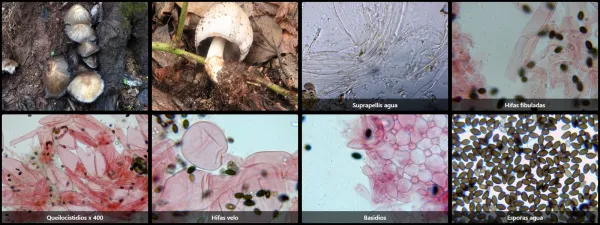

Coprinopsis atramentaria
Taxonomy
Main synonym
Common names
Coprino antialcohólico, urbeltz gorritzaile, bolet de femer.
Geographic references:
Interactive map with data from GBIF.
Morphological Features:
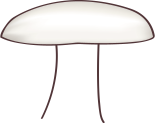
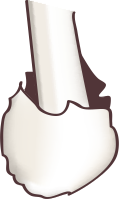
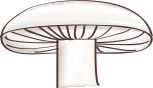
Pileus irregularly ovoid and attached to the stipe in early stages, gradually separating from it to become campanulate; eventually opening somewhat but never flattening. Size is variable, reaching up to 7–8 cm in diameter, though sometimes smaller. The surface may be finely scaly in some specimens, but is generally smooth and glabrous, predominantly grayish with possible ochraceous tinges. The margin is folded in young specimens and striated; these striae extend radially or parallel to nearly the entire length of the pileus.
Lamellae adnate to ascending, very crowded; initially whitish to gray, later becoming vinaceous-red and finally black due to deliquescence.
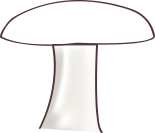
Stipe elongates as the specimen develops; initially short, eventually becoming elongated relative to the pileus diameter. Whitish in color, smooth or slightly scaly, cylindrical, and hollow from an early stage.
Flesh not very thick, whitish in color; odor barely perceptible; taste sweet and mild.
Habitat:
A frequent and locally abundant species with a wide geographical distribution. Fruiting in more or less numerous groups, often caespitose, on woody debris of various types; found in grassland areas, fertilized and nitrogen-rich sites, and even in public gardens. This species can appear practically year-round if conditions are favorable.
Observations:
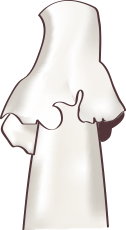
This mushroom causes the so-called coprinoid syndrome or disulfiram-like effect. It contains a substance called coprine, which interferes with ethanol metabolism in the body and causes various unpleasant disturbances. Alcohol consumption does not need to occur precisely at the time of ingestion; the same effect can be triggered if alcohol was consumed hours beforehand or even in the days following mushroom consumption. It is frequently confused with Coprinus comatus, an edible species with a more slender stature, whiter and woolly-scaly appearance, and additionally bearing a cap-like patch at the apex.