
Conocybe vestita
Taxonomy
Main synonym
Common names
Conocybe vestida.
Geographic references:
Interactive map with data from GBIF.
Morphological Features:
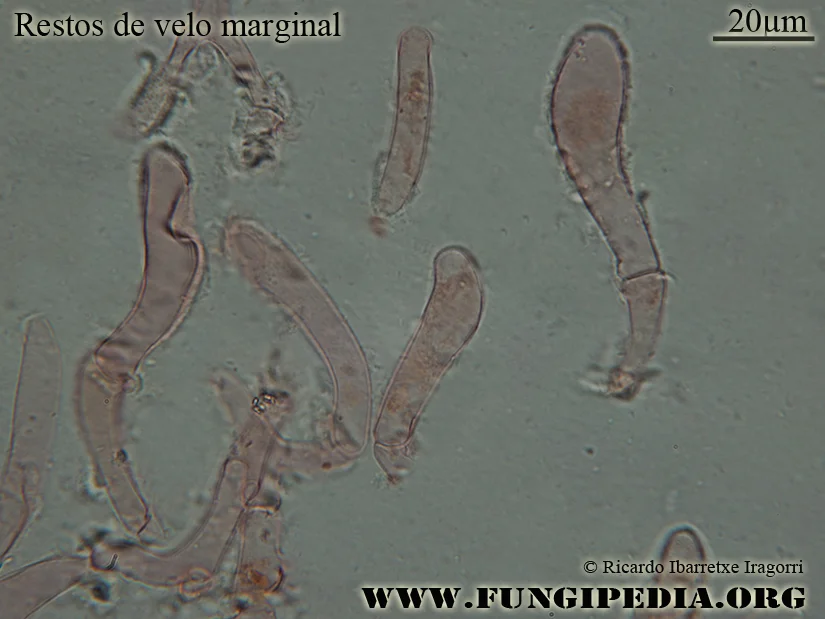
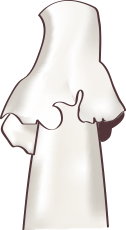
Pileus with a diameter typically ranging from 1 to 3 cm, hemispherical in early developmental stages, later becoming convex to plano-convex, never fully flattening. Cuticle somewhat rugulose or crisped, dry in appearance, ochre in color, generally with the center slightly more prominent and darker, but depending on humidity levels it may exhibit tawny shades, or yellowish tones when drier. Bears veil remnants in the form of floccose patches, especially in young specimens, which remain appendiculate at the margin, imparting an attractive appearance to the basidiome.
Lamellae adnate, slightly ventricose and interspersed with lamellulae, initially yellowish-ochre, later distinctly ochre, and ferruginous-ochre upon sporulation. Margin generally lighter in color than the rest.
Stipe elongated relative to the pileus diameter, reaching up to 5 cm in length, cylindrical, fistulose or hollow, initially whitish but soon turning brown, fibrillose, adorned with floccose patches in young specimens that tend to disappear with age.
Flesh scant and thin, insignificant, ochraceous in color, without appreciable odor and tasteless.
Habitat:
A species that typically fruits solitarily or in small groups, and should be regarded as uncommon. It favors hygrophilous, nutrient-rich substrates, generally under broadleaf trees, fruiting from summer and predominantly during autumn. Our collection was made under Alnus glutinosa in October.
Observations:
This species is characterized by its attractive appearance, uncommon among members of its genus, due to the presence of excess, appendiculate veil remnants on the pileal margin. However, a congener with a similar appearance and appendiculate margin exists, Conocybe appendiculata, which is readily distinguished microscopically by possessing spores with a conspicuous germ pore. Other species exhibiting this marginal feature, such as certain Pholiota, are of a much more robust stature than that displayed by Conocybe vestita.
Microscopy of Conocybe vestita