
Conocybe arrhenii
Taxonomy
Main synonym
Common names
Not available
Geographic references:
Interactive map with data from GBIF.
Morphological Features:
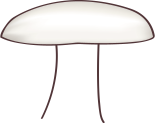
Pileus small, fully developed specimens barely reaching 2 to 3 cm in diameter, hemispherical at first, becoming convex and finally plano-convex, generally retaining an obtuse umbo in the central area. It is hygrophanous, which causes color variability depending on its degree of hydration; it may be reddish-ochre when hydrated, even with a pale orange tinge, gradually turning to more ochre and fading tones as it dries, which may occur patchily rather than uniformly. It is quite fibrillose, and its hygrophanous nature also causes the margin to appear striate by transparency.
Lamellae adnate and not too crowded, somewhat ventricose, pale brown when young and later ferruginous-ochre, lacking the vivid coloration found in other species of its genus.
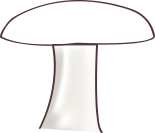
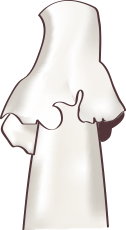
Stipe elongated and more or less cylindrical except at the base, which is bulbous. It has a brown background color but is entirely covered by whitish fibers that give it a lighter appearance. It bears a conspicuous membranous ring with a skirt-like appearance and striate on the upper surface.
Flesh scanty, similar in color to the external surface, practically odorless and tasteless.
Habitat:
It has been found in spring in grassy areas near alder thickets. This species is also recorded during autumn, generally being heliophilous and appearing in small groups. It is a rare mushroom under broadleaf trees and even rarer under conifers.
Observations:
A species suspected of toxicity, especially given its affinity with dangerous species such as the deadly Conocybe filaris, also described on Fungipedia. It is impossible to separate it from other similar species without microscopic examination; Conocybe blattaria is very similar but its cheilocystidia are not cylindrical, and Conocybe hadrocystis, which has a marked floral odor, is also very similar. Some Galerina species are also easily confused with this species.