
Conocybe apala
Taxonomy
Main synonym
Common names
Not available
Geographic references:
Interactive map with data from GBIF.

Morphological Features:
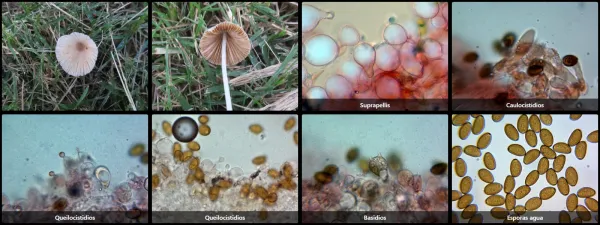
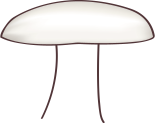
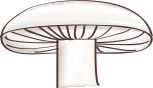
Pileus very small, barely 2 to 3 cm in diameter, conical and pointed initially, later opening slightly to become bell-shaped, never flattening out, nor even becoming convex. Milky white in color, especially when young, becoming somewhat creamier with age. The margin is slightly striate, and the cuticle is dry, only becoming lubricated during rainy periods.
Lamellae adnate and relatively crowded, pale in color when young, turning brown rapidly with spore maturation. Somewhat irregular.
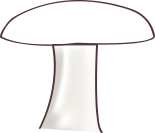
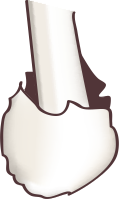
Stipe central and cylindrical, slightly bulbous at the base and tapering towards the pileus, very thin and fragile, whitish in color and longitudinally fibrillose.
Flesh very thin and scanty, white in color, with a grassy odor and a somewhat bitter taste.
Habitat:
It is a very common species, frequently found in fertilized parks and gardens, among grass, especially during the autumn months.
Observations:
This fungus is easily recognized by its conical, milky-white pileus and thin stipe. A similar species is Conocybe pubescens, which has a shorter and more robust stipe, and whose pileus tends to flatten out, unlike the species described here.