
Collybia cirrhata
Taxonomy
Main synonym
Common names
Not available
Geographic references:
Interactive map with data from GBIF.


Morphological Features:
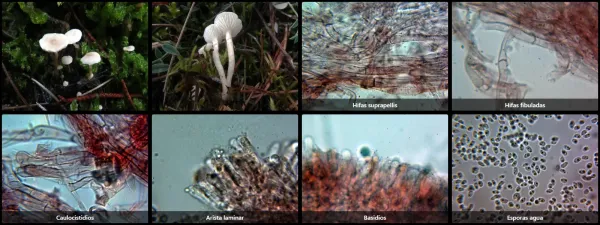
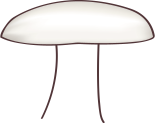
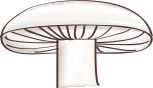
Pileus of minute size; its diameter in the most developed specimens barely reaches 1 cm, usually between 0.5 and 1 cm. Initially somewhat campanulate at emergence, it soon becomes convex and then flattened, even slightly depressed centrally when old. The cuticle is silky in young specimens, later becoming smooth and glabrous, with a predominant dirty white color that may turn creamy with age, while the central zone retains a slightly more ochraceous tone in many specimens. The margin is fairly regular and barely striate in young specimens, becoming undulate and somewhat more striate over time.
Lamellae adnate, whitish in color, somewhat creamier in older specimens, rather crowded, with numerous lamellulae intercalated despite the small size of the fruitbody.
Stipe cylindrical and very elongated, potentially tripling the pileus diameter in length, fistulose from an early stage and thin, even filiform. It shares a similar color to the pileus, whitish with flesh-toned nuances, featuring a furfuraceous surface and the presence of whitish fibers at the junction with the mycelium.
Flesh scant, insignificant, watery whitish in color, with no appreciable odor or noteworthy taste.
Habitat:
Perhaps the best-known species within this section of small Collybia taxa, it generally grows in groups of numerous specimens on decaying old carpophores of other species, and also emerges from putrefied woody substrate. Its preferred fruiting season is autumn; given its minute size, it often goes unnoticed, yet we consider it a relatively common species.
Observations:
This species is characterized by its growth in clusters on rotting old mushrooms and the absence of a sclerotium. Within its group, there are two nearly identical species, Collybia tuberosa, which emerges from a darkish sclerotium, and Collybia cookei, which emerges from a yellowish-ochraceous sclerotium. Somewhat different is Collybia racemosa, which is gray in color and bears excrescences on its stipe that terminate in abortive pileus-like structures. Macroscopically, it may also bear some resemblance to Alboleptonia sericella, which has a pink spore print.