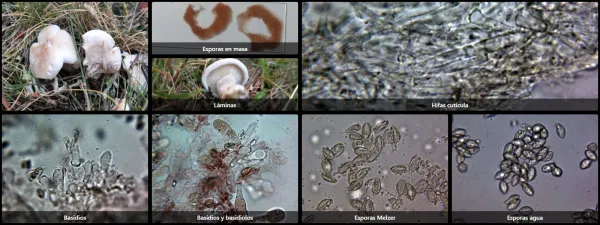

Clitopilus prunulus
Taxonomy
Main synonym
Common names
Molinera, errotari, moixernó blanc, chivata.
Geographic references:
Interactive map with data from GBIF.


Morphological Features:
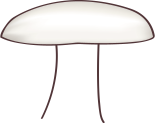
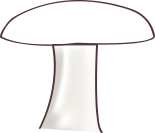
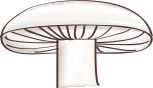
Pileus 5 to 12 cm in diameter, generally white, though sometimes slightly grayish, with an incurved margin when young, later becoming expanded, somewhat viscid in wet weather, otherwise matte or felted, convex to flattened in shape, perhaps slightly infundibuliform in age.
Lamellae strongly decurrent on the stipe, white turning pink due to the spore print, which is of that color. Rather crowded.
Stipe narrow and short, often curved and somewhat eccentric, white, pruinose, and slightly broadened at the cottony base.
Flesh thick in the center of the pileus, thinner elsewhere, very fragile, to the point of breaking almost upon mere touch, with a strong farinaceous odor and a mild taste.
Habitat:
A frequent and fairly widespread species that fruits equally in coniferous and deciduous forests. Its fruiting season is summer and autumn.
Observations:
It is a choice edible with a fine and delicate flavor, but its collection should be reserved solely for experts, as it can be easily confused with several highly toxic white Clitocybe species, such as Clitocybe rivulosa, candicans, phyllophila, etc., which lack the pronounced farinaceous odor and do not have a pink spore print. This species is also known as the "chivata", as it fruits in the same locations as the highly prized Boletus.