
Caloboletus calopus
Taxonomy
Main synonym
Common names
Not available
Geographic references:
Interactive map with data from GBIF.
Morphological Features:
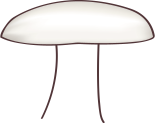
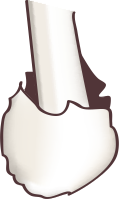
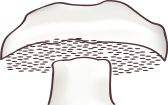
Pileus up to 15 cm in diameter, hemispherical to convex with a slightly exsert margin. Solid and fleshy, light-colored with tonal variability; when young nearly white with a velvety cuticle, it tends toward gray or olivaceous tones, and the cuticle becomes opaque.
Tubes pale yellow, later olivaceous, fine and quite dense, rounded at the stipe attachment, bruising blue when cut.
Pores yellow, more vividly colored than the tubes, bruising blue on contact.
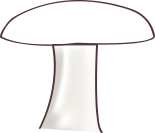
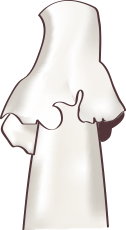
Stipe solid, cylindrical, and generally thickened toward the base; it typically bears a band of vivid yellow near the pores, with the remainder covered by a conspicuous red reticulation that is more open in the upper portion and closes toward the base, which is entirely red.
Flesh compact and solid, especially in the pileus, white to yellowish, bruising faintly blue when cut. Its odor is insignificant and its taste markedly bitter.
Habitat:
Although the literature indicates it as a species that also fruits under conifers, we have always collected it under broadleaf trees, particularly oaks and beeches. An early-fruiting species, it may appear from August onwards.
Observations:
This species is inedible due to the bitter taste of its flesh. It may bear some resemblance to Suillellus satanas, which however has red pores, not yellow. It also resembles Caloboletus radicans, which has a non-reticulate stipe.