

Bovista plumbea
Taxonomy
Main synonym
Common names
Bejín plomizo, astaputz berunkara, pet de llop gris.
Geographic references:
Interactive map with data from GBIF.




Morphological Features:
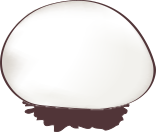
Basidiocarp with a characteristic globose shape, sometimes fissured at the point of attachment to the substrate but lacking a stipe or sterile basal zone, with a diameter ranging from 2 to 4 (5) cm, and a striking white color in young specimens that contrasts markedly with the surrounding environment.
Peridium composed of two perfectly differentiated layers; the outer layer or exoperidium is smooth and white, relatively thick for the size of the species yet fragile, readily cracking into plates and revealing the endoperidium beneath. This endoperidium is lead-grey, which gives the species its name, and has a markedly different consistency from the exoperidium; it does not crack and feels papery to the touch.
Gleba white and spongy in young specimens, maturing to yellowish and finally becoming brown and pulverulent as the spores develop. Dehiscence occurs via an apical pore.
Flesh virtually absent; only the gleba in its white stage may superficially resemble flesh.
Habitat:
This is a predominantly heliophilous species; its fruiting is associated with meadows and forest clearings, growing among grasses. It shows no particular preference for specific altitudes, occurring equally in mountainous regions and coastal meadows, nor for specific soil types or geographic areas. It is widely distributed, very common, and abundant. It typically fruits in groups colonizing extensive areas, rarely appearing as solitary specimens.
Observations:
Although some authors consider it edible when the gleba is white, we regard it as completely lacking culinary value. This species is characterized by its globose appearance, two clearly distinguishable layers, and a lead-grey, papery endoperidium. It can be easily confused with Bovista nigrescens, a much less abundant species featuring a thinner exoperidium and a brown rather than lead-grey endoperidium. By habitat, it may also be mistaken for Lycoperdon pratense, which is larger in size and possesses a stipe-like structure or sterile base.