
Boletus aereus
Taxonomy
Main synonym
Common names
Hongo negro.
Geographic references:
Interactive map with data from GBIF.

Morphological Features:
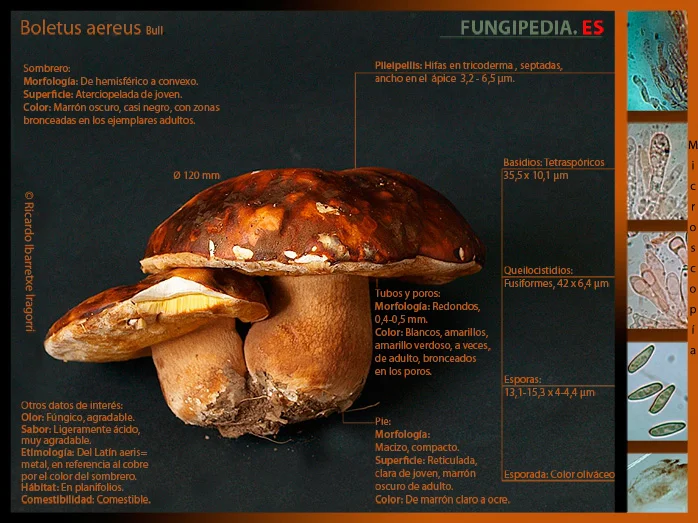
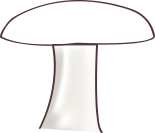
Pileus up to 20 cm, fleshy, initially hemispherical, later convex, with a smooth and glabrous cuticle dark brown in color, occasionally nearly black, and velvety to the touch, a texture that fades over time.
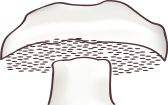
Tubes long, distinctly white in color, later turning yellowish and eventually becoming greenish, free or adnate to the stipe.
Pores concolorous, quite dense, and round.
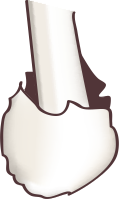
Stipe central, very robust and solid; in its early stages thickened at the base, even ventricose, later adopting a cylindrical shape. Ochre in color, much paler than the pileus, and bearing a very fine reticulum that may extend up to the upper two-thirds of the stipe.
Flesh thick, compact, and white in color, with a very pleasant odor and taste.
Habitat:
A species that fruits under deciduous trees such as chestnut, oak, or beech, as well as in holm oak and cork oak woodlands. It is quite thermophilous, thus fruiting during summer months or early autumn. Adapted to the Mediterranean climate, it is abundant in certain regions.
Observations:
A choice edible, one of the most sought-after species by mushroom foragers. Nearly all literature notes its potential confusion with edulis, pinicola, and reticulatus; however, we sincerely believe that simply observing the pileus color is sufficient to perfectly distinguish it from its other highly prized edible counterparts.
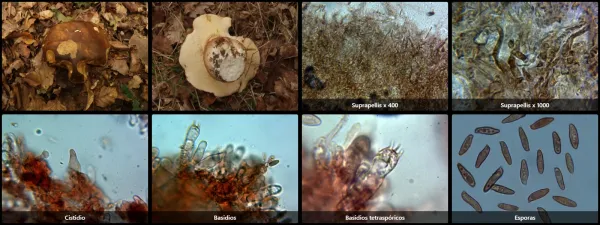
Microscopy of Boletus aereus